
Robotics is a system of suppliers, not a single product category
A factory robot project can involve several companies before a working cell reaches the production line. The robot arm is only one layer. Motion components, end effectors, sensors, safety equipment, software, fixtures and integration each solve a different part of the job.
In China, the supplier landscape includes manufacturers of robot arms and mobile platforms, specialists in reducers and grippers, machine-vision companies, and system integrators that combine equipment into an application. A supplier may operate in more than one layer, so check the exact product and project role rather than relying on a company label.
- Robot and mobile-platform manufacturers
- Reducers, motors, drives, controllers and joint modules
- Grippers, vacuum tooling, sensors and machine vision
- System integrators, distributors, commissioning and service partners
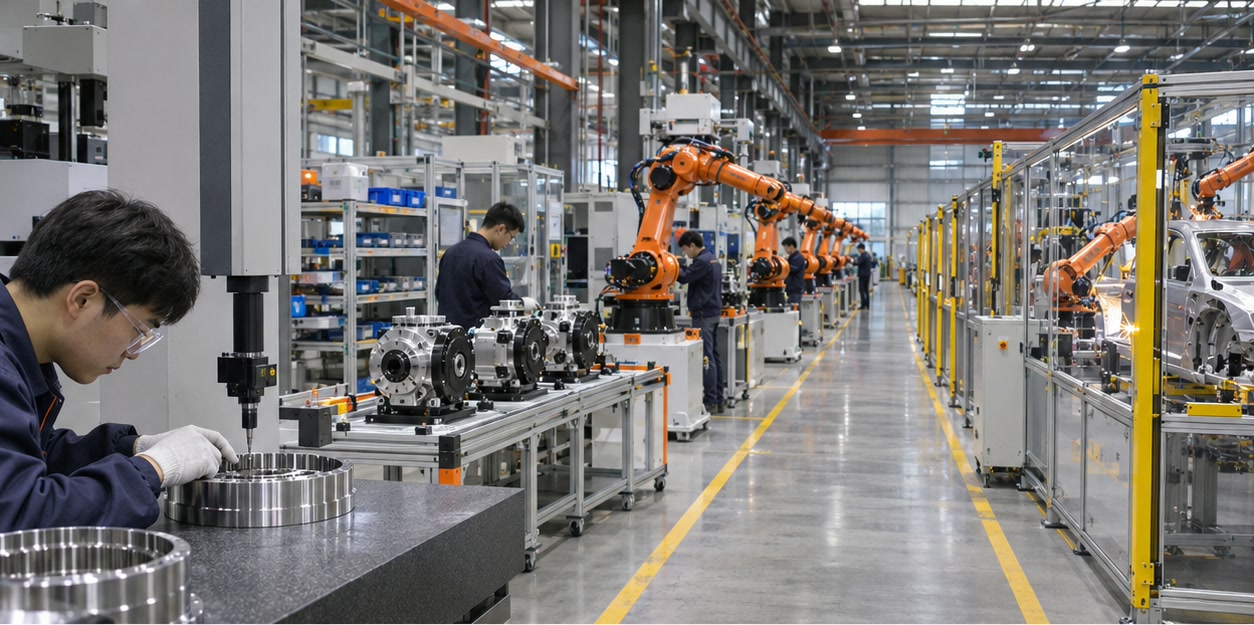
Follow the path from component to production
A component maker may sell a reducer directly to a robot OEM, an actuator builder or an integrator. The integrator then designs the cell around the end user’s process. Distribution partners may support sales, local stock or service, but their responsibilities vary by territory and contract.
For an overseas buyer, the important question is how responsibility flows across the chain. Ask who owns the robot configuration, application risk assessment, interfaces, installation, spare parts, software access and response when a third-party component fails.
- Component supplier → robot or tooling manufacturer
- Robot and peripheral suppliers → system integrator
- Integrator or channel partner → end user and local production site
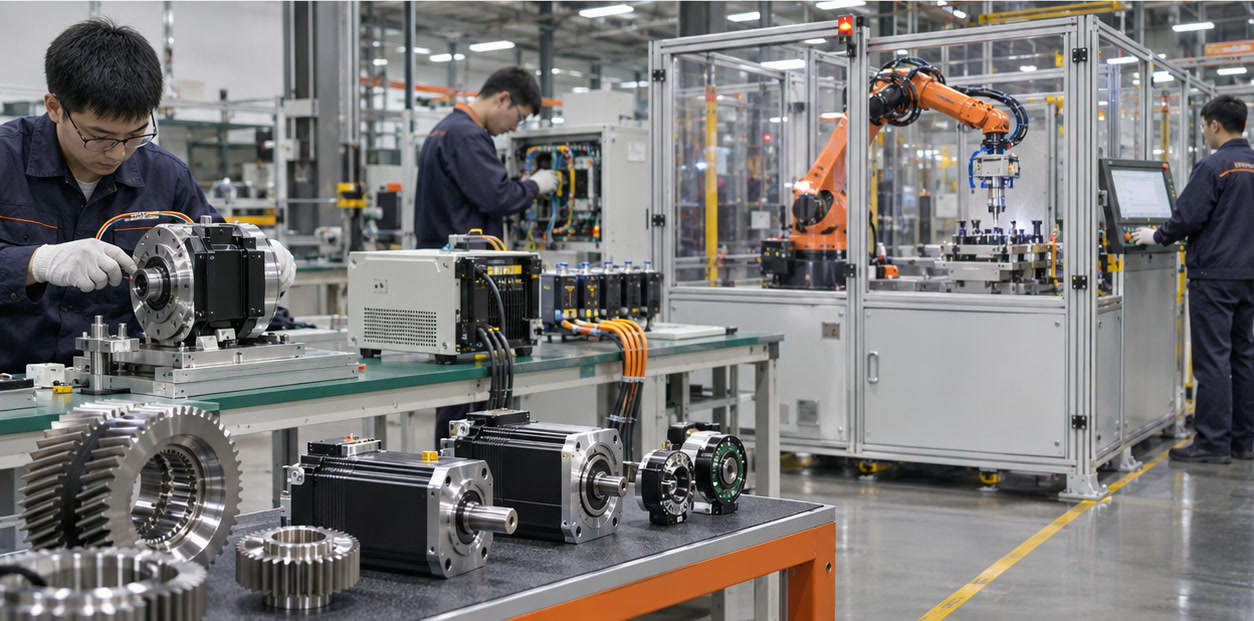
Use examples to understand the landscape
Public product pages illustrate the range of specialisms: Leaderdrive lists strain-wave gears and rotary actuators; DH-Robotics lists electric grippers; Mech-Mind lists industrial 3D cameras and vision software; AgileX Robotics lists mobile robots and developer platforms. These examples describe product categories, not endorsements or a complete map of the market.
A directory is a starting point for research. Confirm the legal seller, exact model, current documentation, export terms and after-sales arrangement for each specific project.
- Search by component or application, then identify the manufacturer and authorized sales route
- Distinguish a component supplier from a turnkey integrator
- Record what each company actually supplies and what remains outside its scope
What companies make up the robotics supply chain?
It can include robot and mobile-platform manufacturers, suppliers of reducers, motors and controllers, end-effector and vision makers, safety-equipment providers, system integrators, distributors and service partners. The mix depends on the application.
Does buying a robot directly from its manufacturer provide a complete solution?
Not necessarily. The offer may cover only the robot and controller. Tooling, fixtures, safety engineering, peripherals, application programming, installation, acceptance and local service may be separate.
Sources and further reading
- IFR — Industrial robot market participants and distribution channels — Definitions of robot producers, distributors, integrators and end users.
- Leaderdrive — Product categories — Manufacturer page listing strain-wave gears, rotary actuators and other motion products.
- DH-Robotics — Electric grippers — Manufacturer product categories for robotic electric gripping.
- Mech-Mind — Machine-vision products — Manufacturer page listing industrial 3D cameras and related vision products.
- AgileX Robotics — Mobile robot products — Manufacturer product page and mobile-robot category navigation.
Technical descriptions link to published sources. Specifications can change; verify the current documentation before purchase.