
The workcell is a system
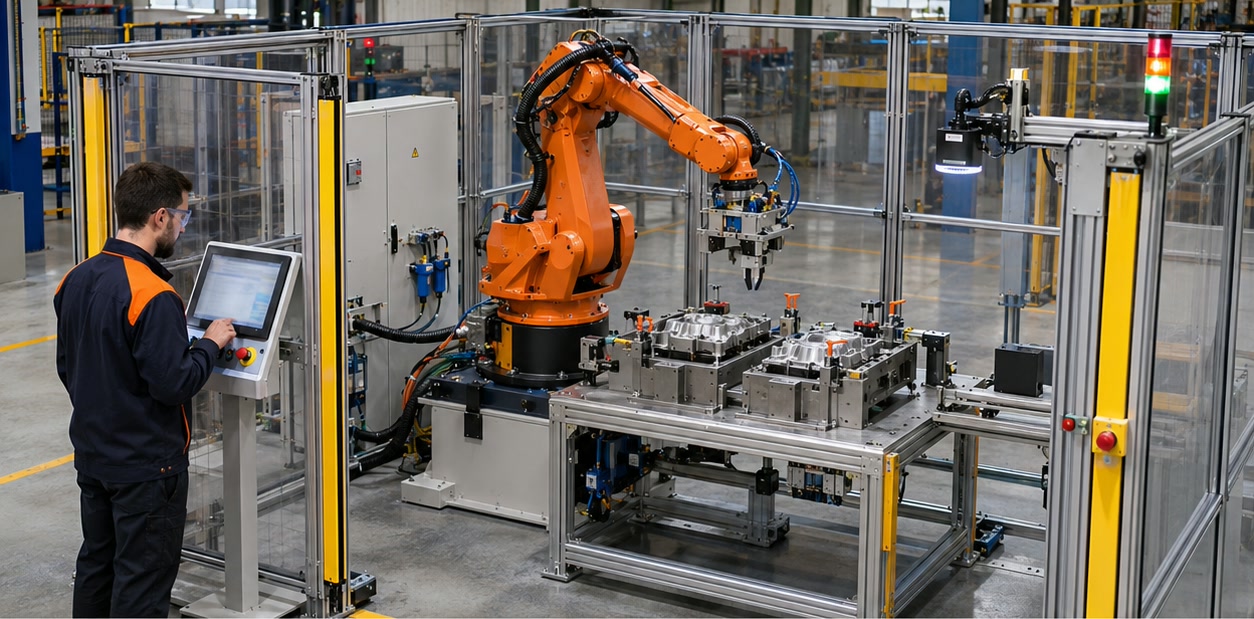
A robot workcell is the combination of the robot and the equipment, software, workpieces and operating space needed to perform a process. A typical handling cell may include an arm, controller, gripper, camera, fixture, conveyor, electrical cabinet, operator interface and safety devices. Welding or machine tending adds process-specific equipment.
The system boundary matters because an arm supplier, end-effector supplier, machine builder and integrator may each own different interfaces. Write down who provides, connects, configures and validates every item.
Map the material and information flow
Trace the part from arrival through processing to handoff. Identify where sensors confirm presence, where the robot receives a start signal, how a machine reports ready or fault, and what happens when a part is missing. Include operator replenishment, recovery and maintenance access in the same map.
ABB’s published robot-cell module manuals show examples that combine robot, vision, gripper, controller and electrical equipment, while also stating that additional integration may be required. The exact package varies by supplier and process.
Keep a responsibility matrix
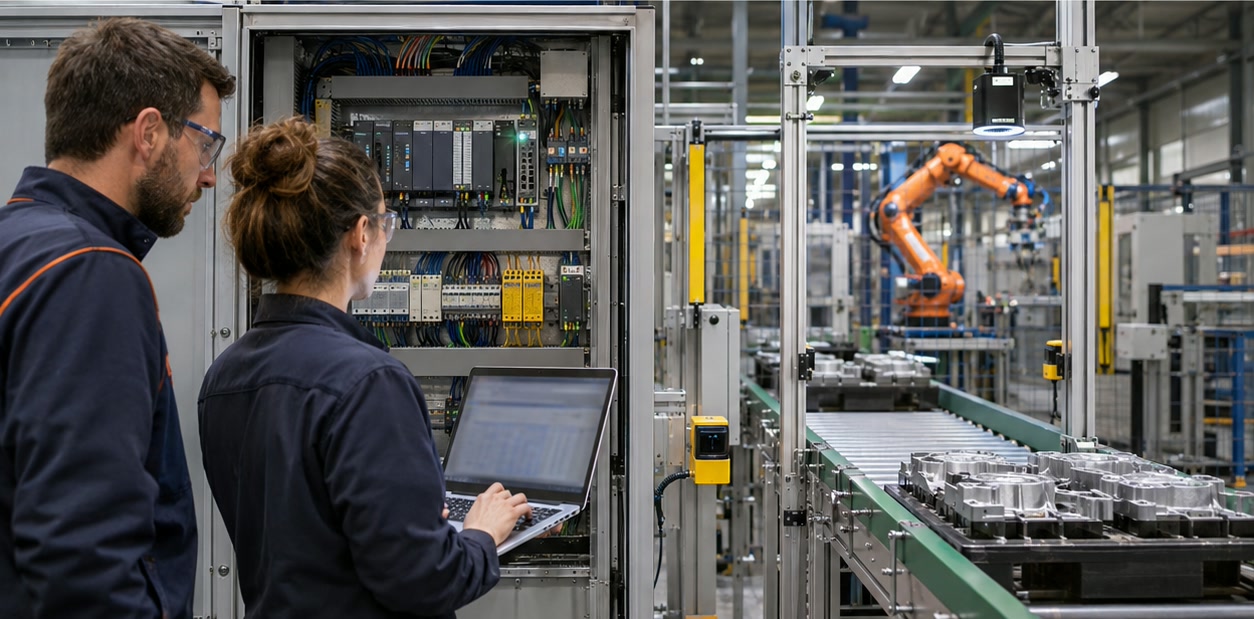
Before ordering, list the physical and digital components, interface owner, required document and acceptance responsibility. This reduces gaps such as an unassigned safety scanner, an incompatible tool connector or no agreed test for vision-to-robot calibration.
The final design should be reviewed against the applicable machinery and robot standards for the destination market. An integrator should assess the complete cell rather than rely on a component’s brochure description.
- Robot arm, controller and programming software
- End effector, tool changer, fixtures and process equipment
- Sensors, vision, PLC or line-control interfaces
- Utilities, electrical cabinet and cable routing
- Safeguarding, commissioning, training and service
Does buying the robot include the complete workcell?
Not necessarily. Confirm the exact delivery scope, integration work, fixtures, safety equipment, commissioning, training and acceptance responsibilities in the quotation.
Who is responsible for integrating a robot cell?
Responsibility varies by project. Name the system integrator or responsible engineering party and document each supplier’s interfaces and deliverables.
Sources and further reading
- ISO 10218-2:2025 — Industrial robot applications and robot cells.
- ABB Robotic Parcel Inductor Product Manual — Example workcell components and integration scope.
Technical descriptions link to published sources. Specifications can change; verify the current documentation before purchase.