Practical explainers on robots, components and sourcing from China, with cited sources.
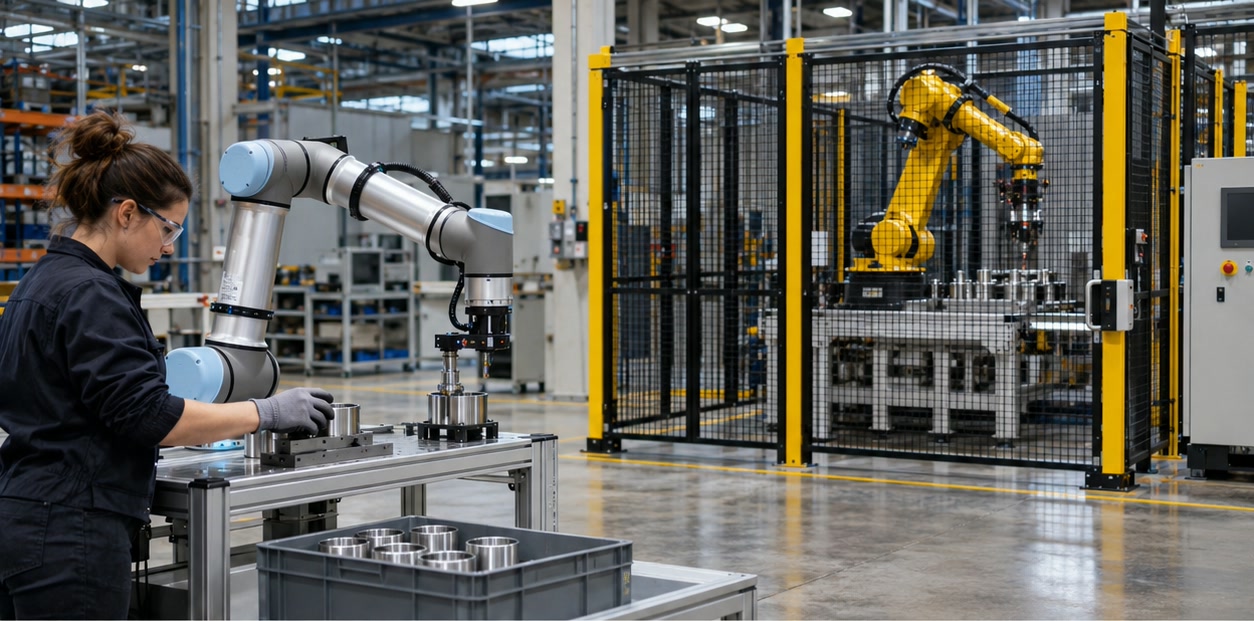
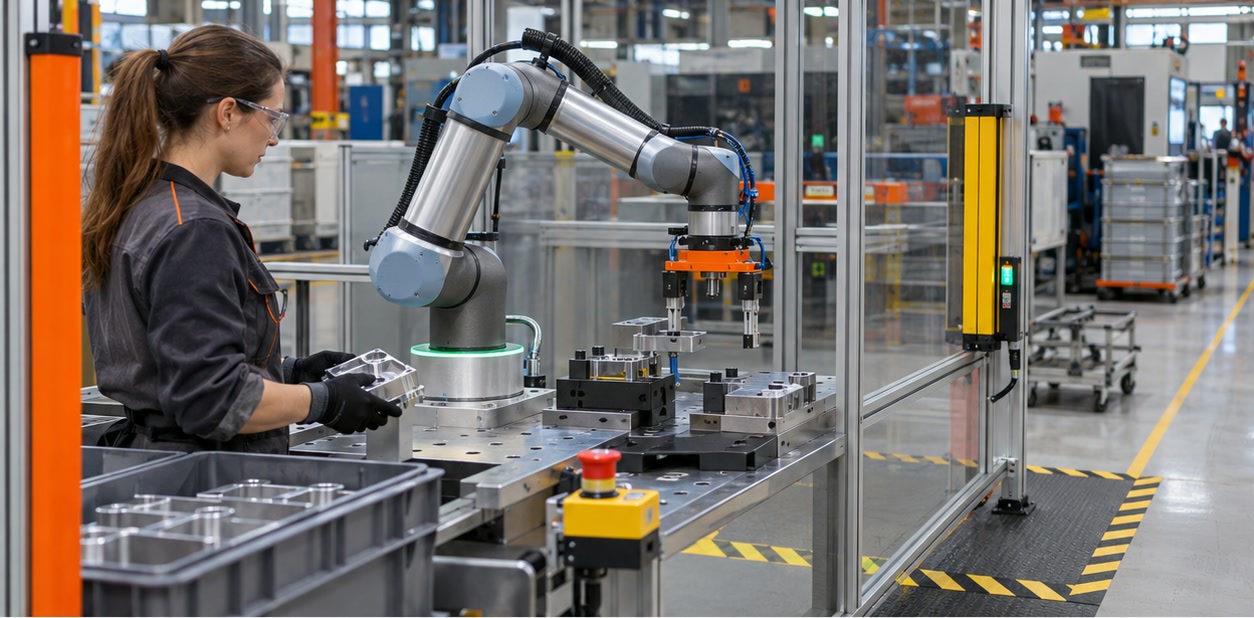
Industrial robot describes a robot’s industrial role; collaborative robot describes equipment and an application intended for people to work nearby. The cell still needs an application-specific safety assessment.
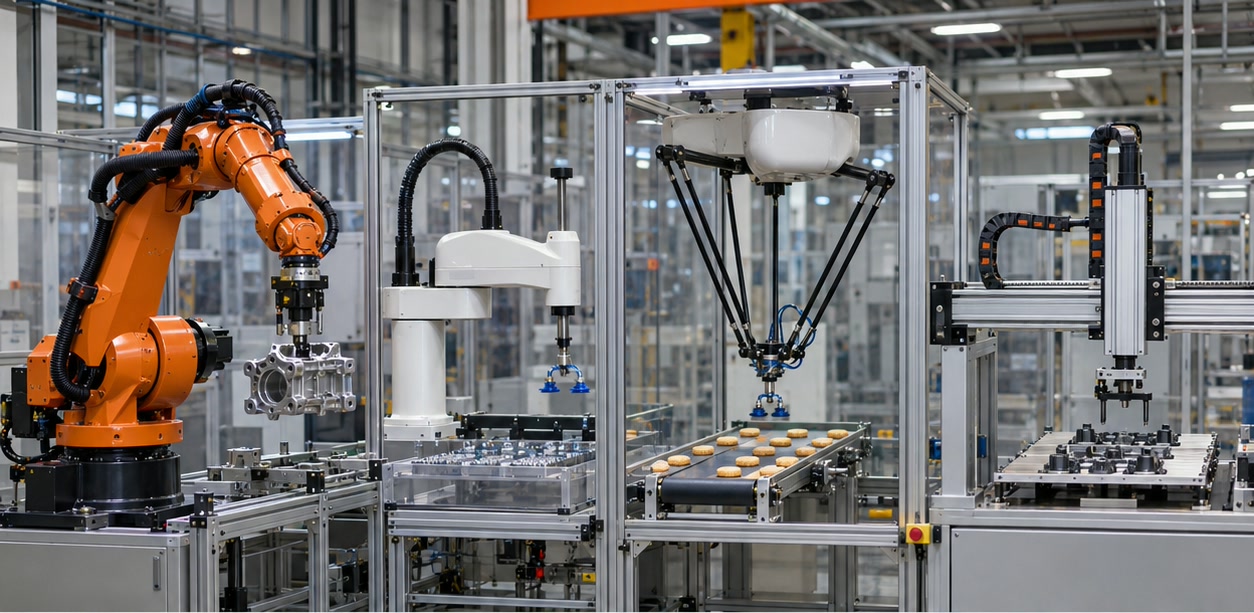
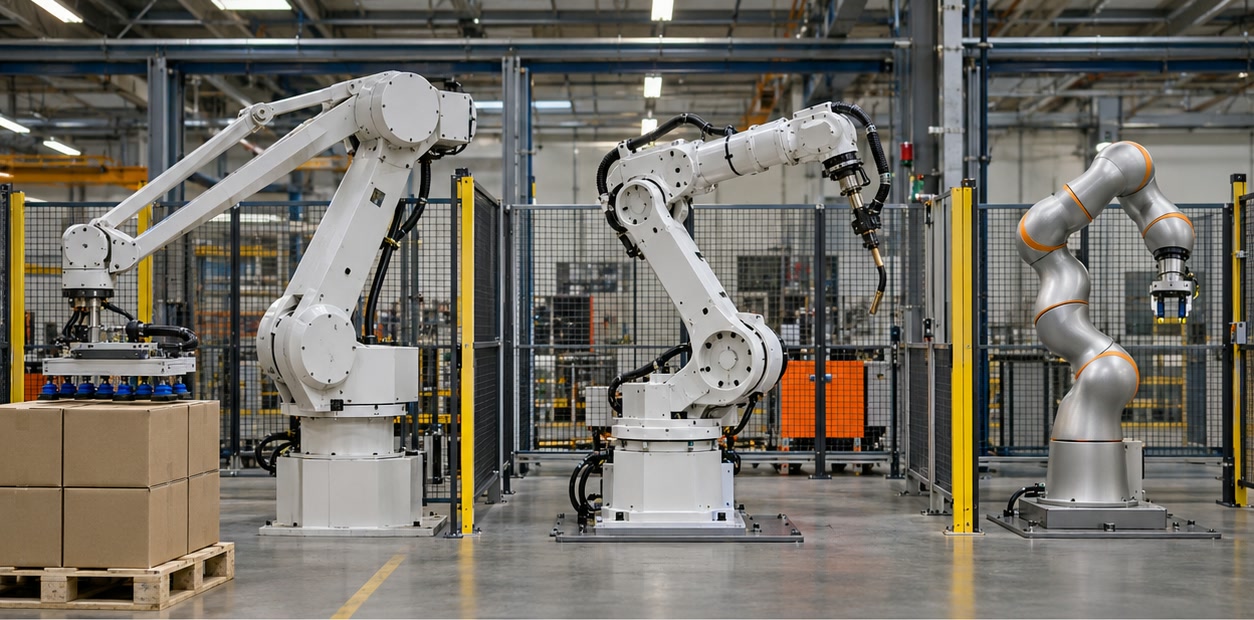
Read the guide ↗Industrial robots are commonly grouped by mechanical structure. Learn what articulated, SCARA, parallel or Delta, and Cartesian robots look like, and which workcell questions to use when considering them.
Read the guide ↗Choose an industrial robot by mapping the task, tool path, payload, reach, cycle, environment and integration needs. The application brief should come before a shortlist of robot types or products.
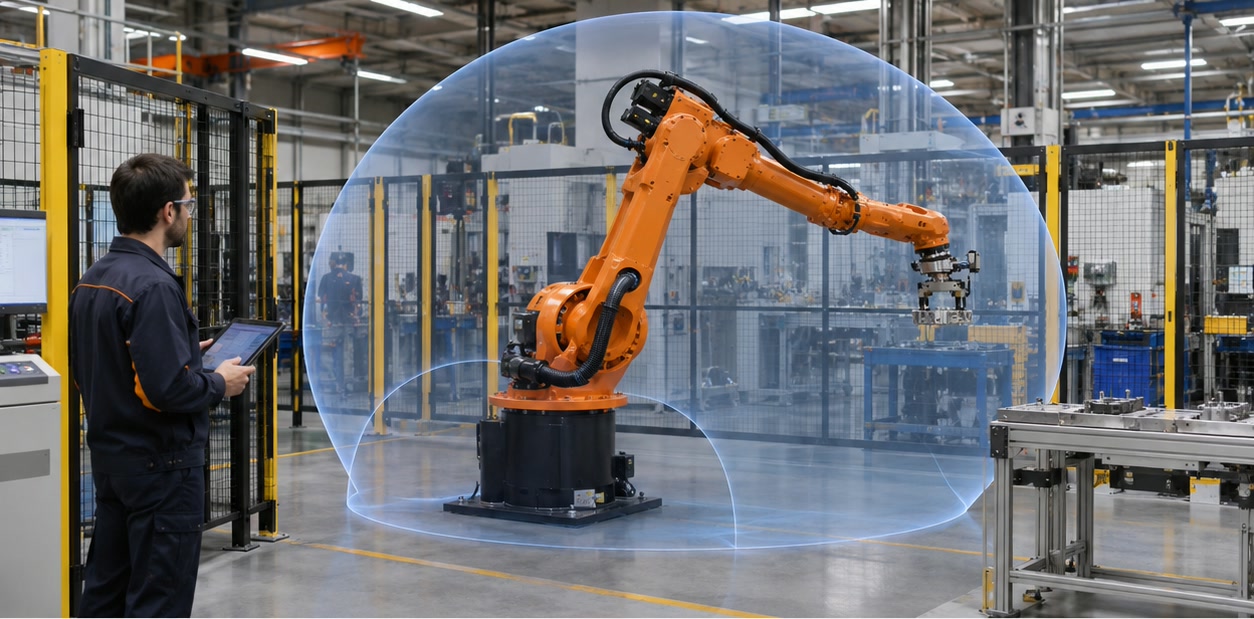
Read the guide ↗Payload and reach are core robot-arm specifications, but a catalog value is only meaningful with its test conditions, load position and path. Read both figures alongside tool mass, inertia and workspace geometry.
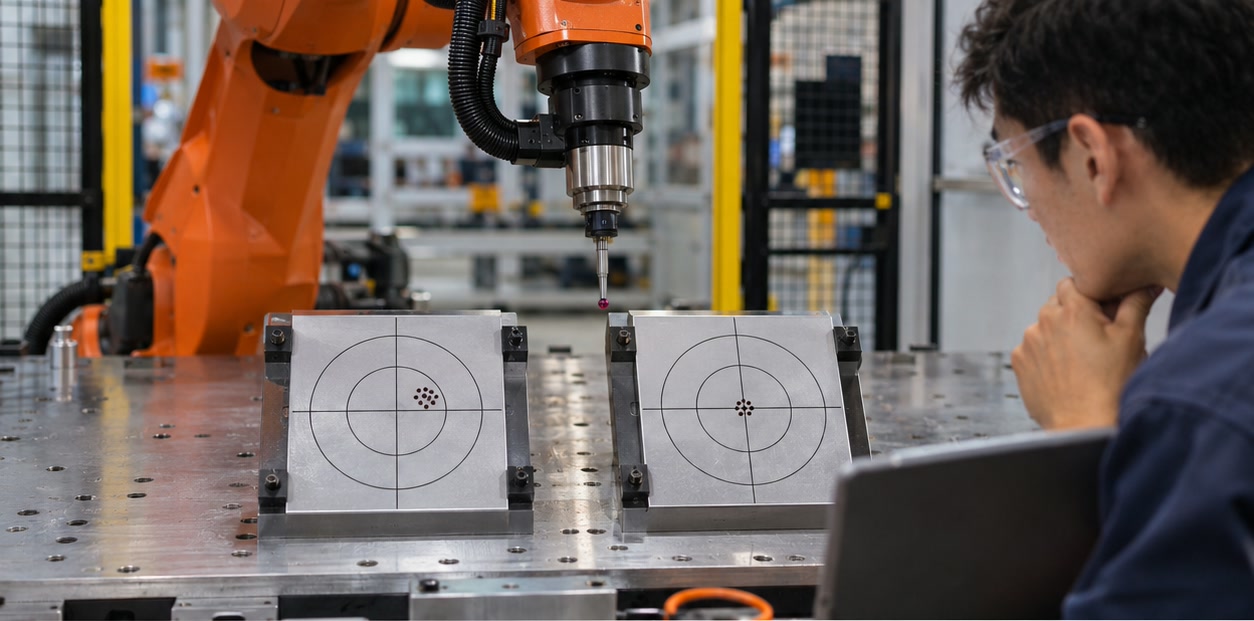
Read the guide ↗Repeatability describes how closely a robot returns to the same position under defined conditions. Accuracy describes closeness to a target position. A datasheet’s test method matters when either number is used for a process requirement.
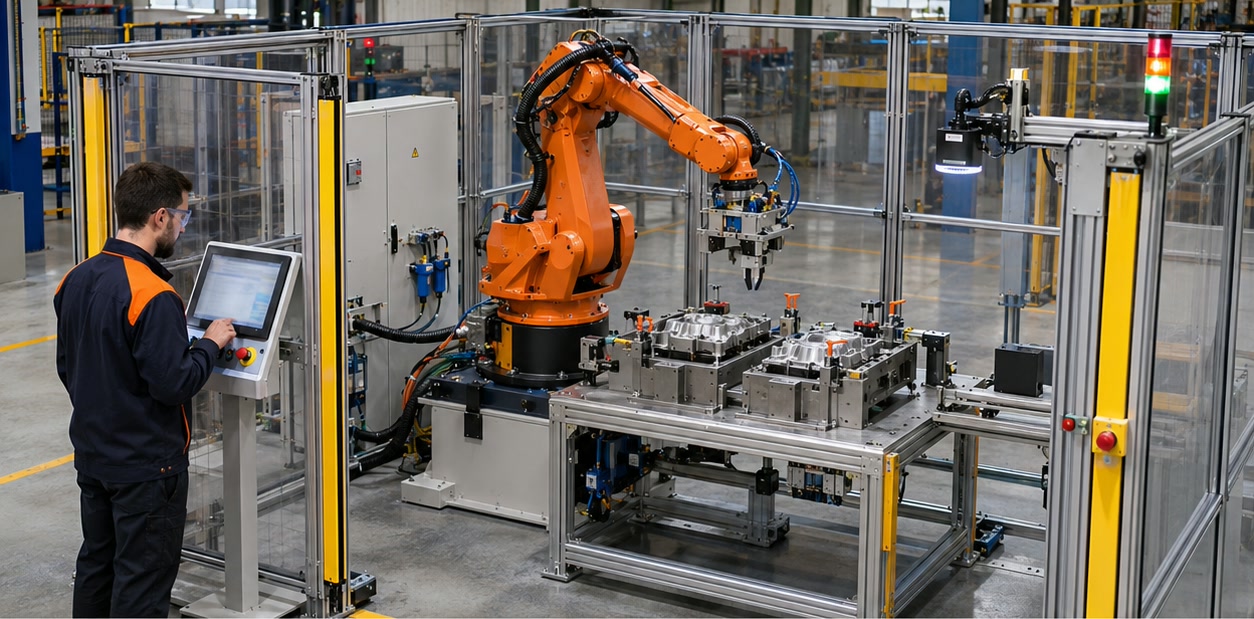
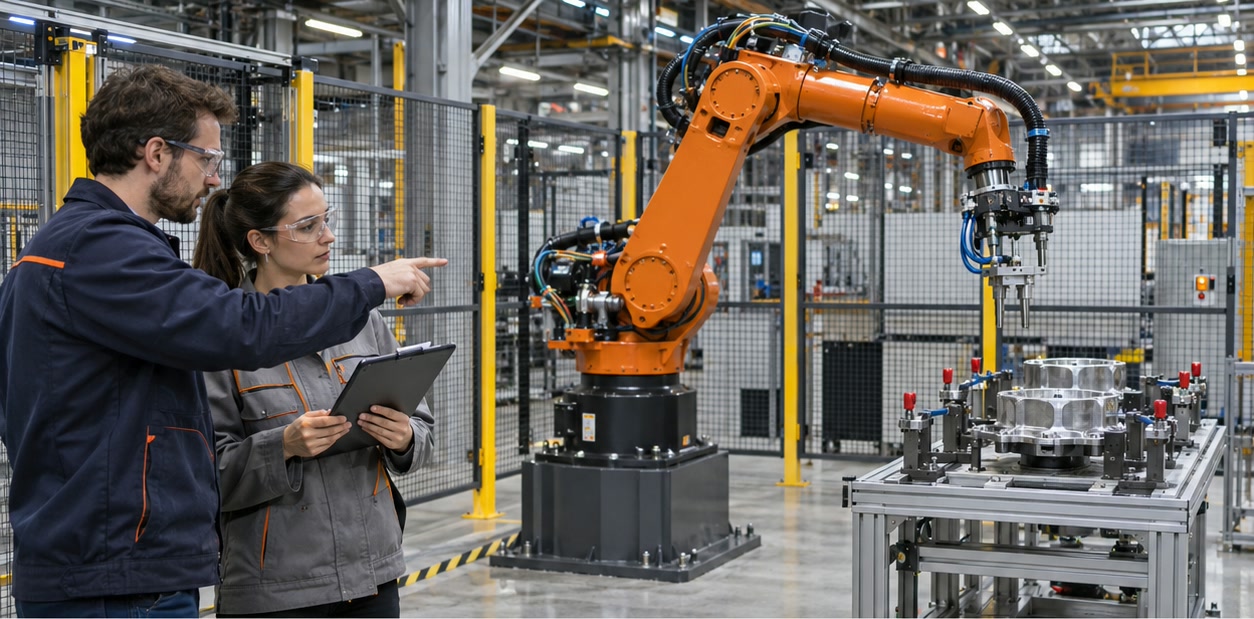
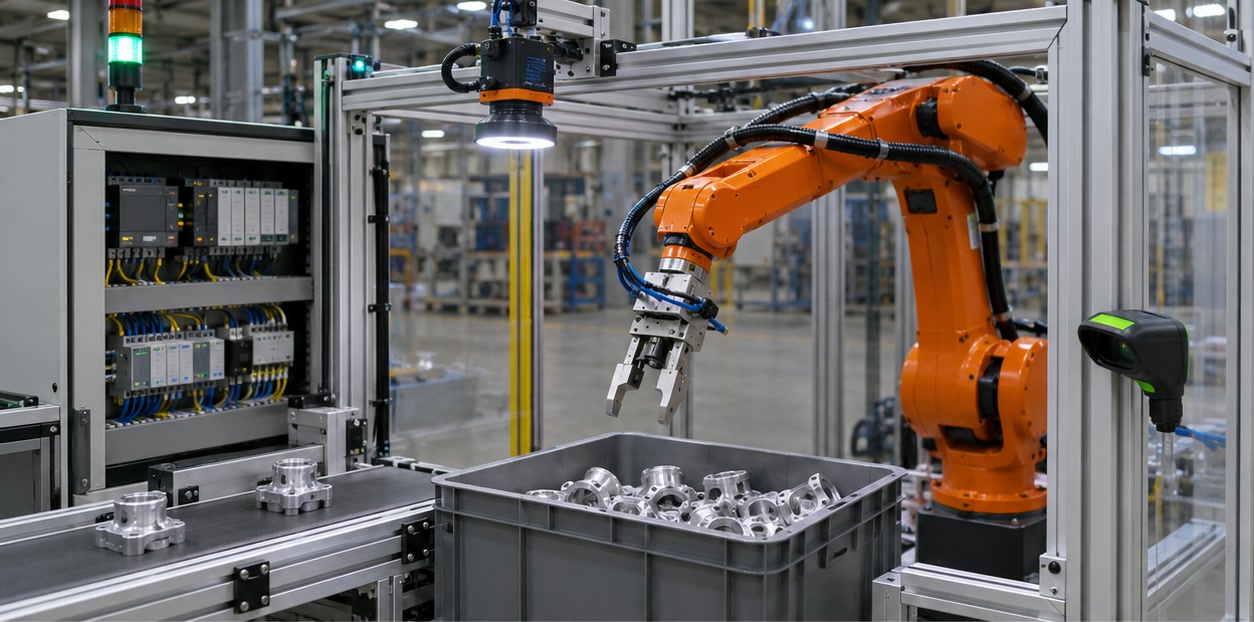
Read the guide ↗A robot workcell combines the arm with tooling, controls, fixtures, sensors, utilities, safety equipment and the surrounding process. The robot is one subsystem in a larger installation.
Read the guide ↗A collaborative robot label does not settle how a workcell can be operated. Review the full application—including tooling, parts, layout, motion and people—and confirm the required protective measures for the destination market.
Read the guide ↗An axis is a controlled direction of robot motion. More axes can add orientation or reach options, but the useful motion depends on the task, workspace, path and control system.
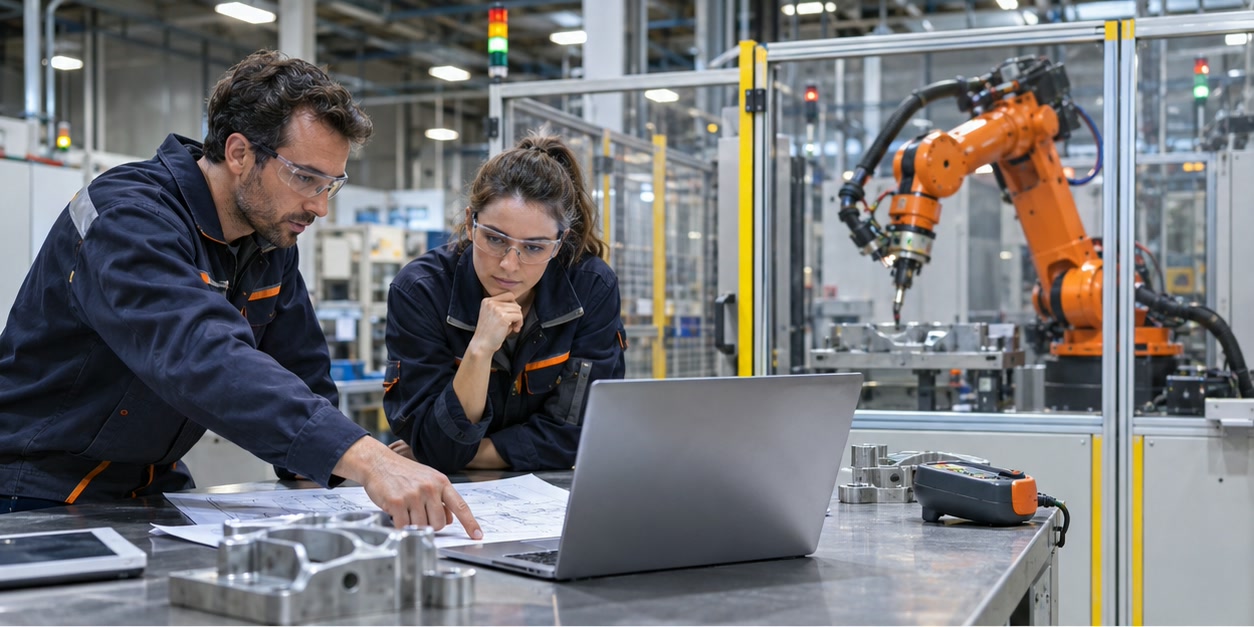
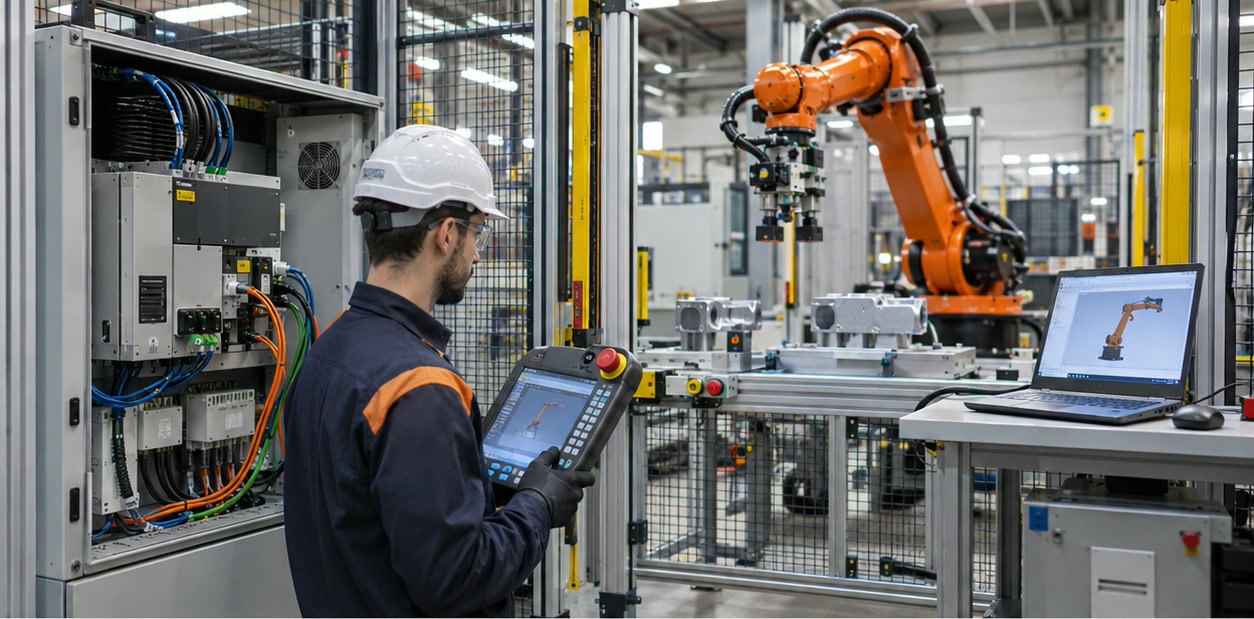
Read the guide ↗The controller runs robot motion and coordinates system functions; a teach pendant provides an operator interface; engineering software helps configure, program and simulate the cell. Exact capabilities vary by robot platform.
Read the guide ↗Understand the robot datasheet terms that shape application fit, including payload, reach, repeatability, speed, mounting, environment, controller and interfaces.
Read the guide ↗A robotics sourcing project starts with an application brief, a clear specification and a documented supplier review. Confirm technical fit, delivery scope, destination-market requirements and service responsibilities before placing an order.
Read the guide ↗A practical robotics RFQ checklist for defining the task, site conditions, interfaces, safety scope, validation criteria and commercial terms before suppliers quote.
Read the guide ↗A buyer-focused checklist of robot manuals, drawings, interface data, test evidence and compliance records to request before ordering and commissioning.
Read the guide ↗Assess whether a robotics supplier can support your application, documentation, integration, export and after-sales requirements with evidence tied to the project.
Read the guide ↗Learn how to review a robotics quotation by separating equipment, engineering, integration, commissioning, acceptance, support and commercial assumptions.
Read the guide ↗Plan factory and site acceptance tests for a robot cell with representative parts, agreed cycle and quality measures, fault recovery checks and complete handover records.
Read the guide ↗Understand how robot manufacturers, component suppliers, vision providers, integrators and service partners fit together across a robotics project in China.
Read the guide ↗A non-ranked directory of selected China-based robotics suppliers and the product categories or families shown on their public pages, with links for further research.
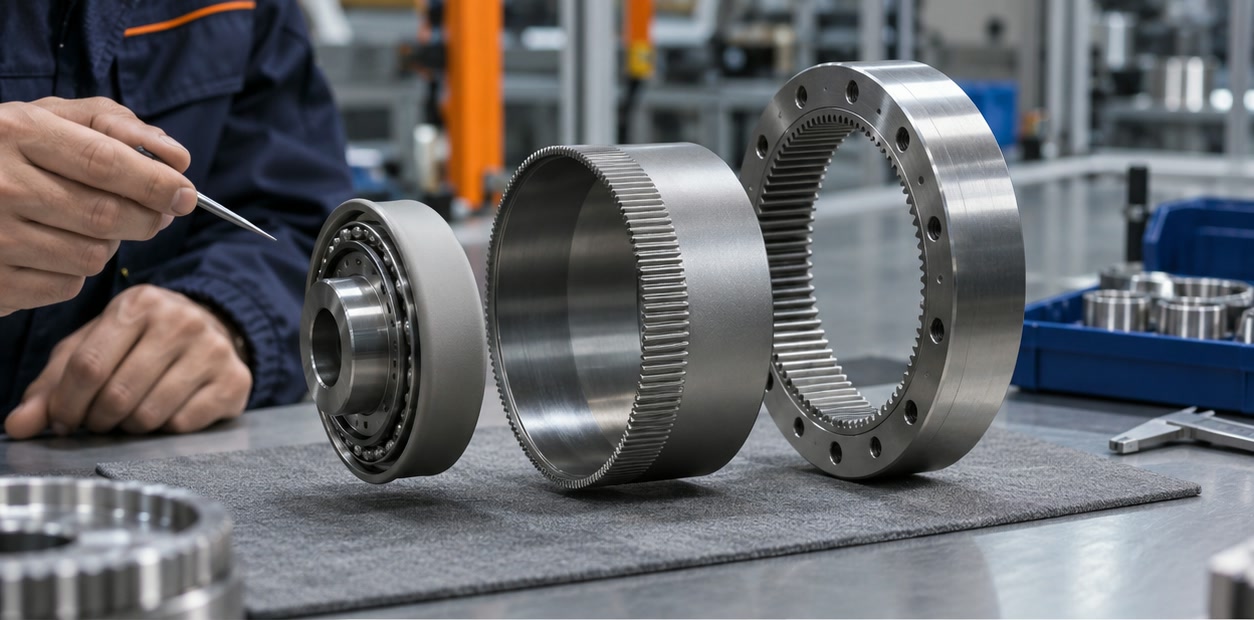
Read the guide ↗Learn how a strain-wave gear works, what its three main components do, why robots use this reducer type and which application limits to check.
Read the guide ↗A practical guide to reading strain-wave reducer specifications, including torque definitions, speed, backlash, stiffness, service life, mounting and test conditions.
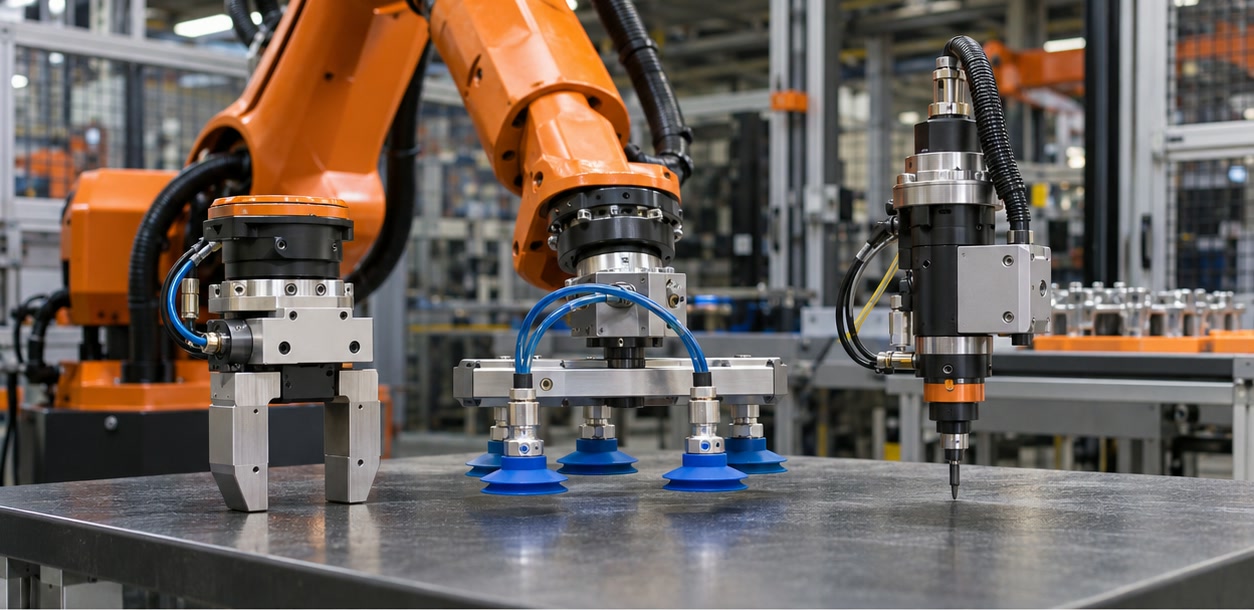
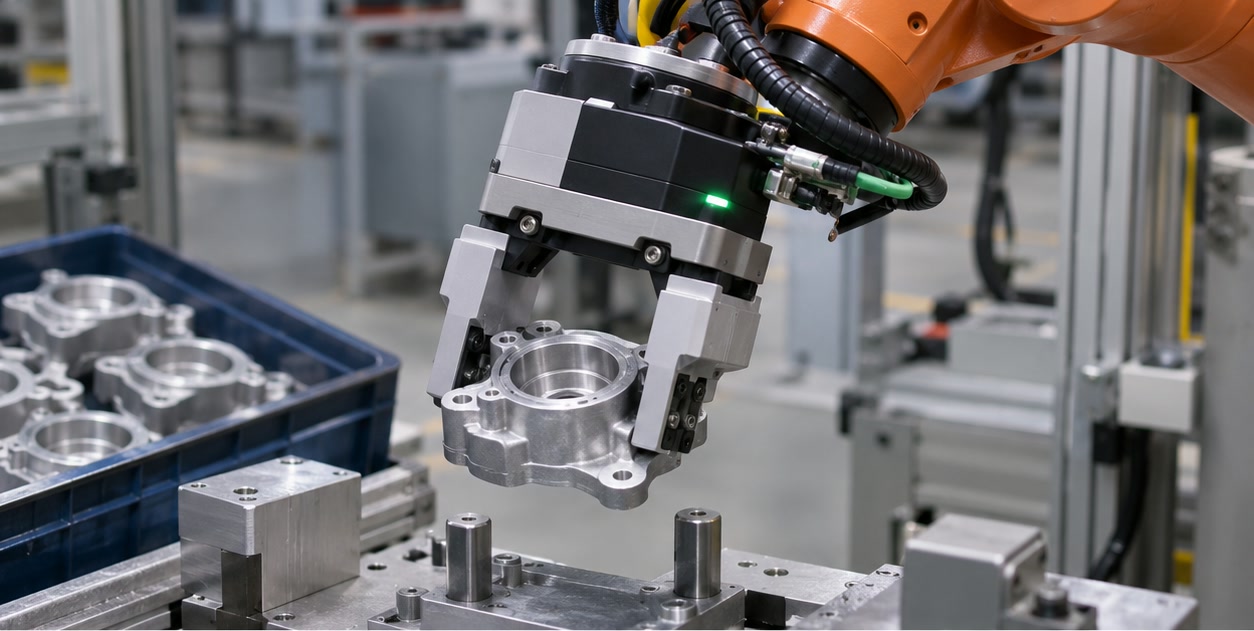
Read the guide ↗Learn what a robot end effector does, how common gripping and process-tool types work, and what to check at the robot flange and in the application.
Read the guide ↗Select an electric gripper by matching the workpiece, jaw travel, gripping force, feedback, cycle, robot interface and environment to the application.
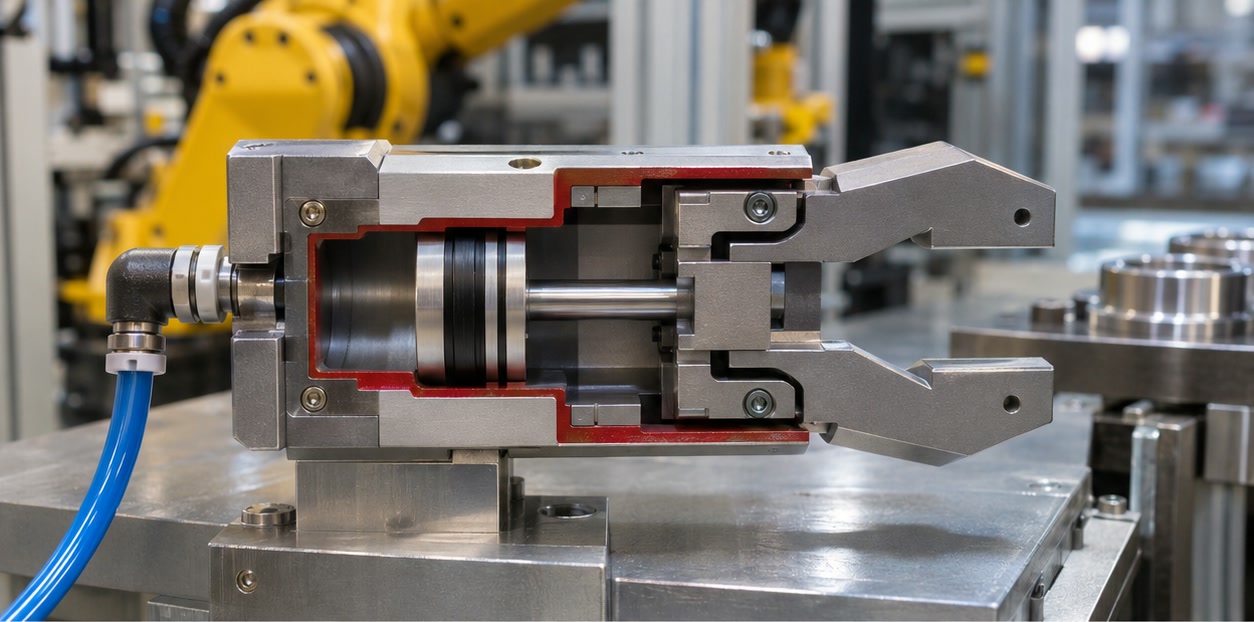
Read the guide ↗Understand how compressed-air grippers open and close, how to size stroke and gripping force, and what air supply, sensing and safety details to check.
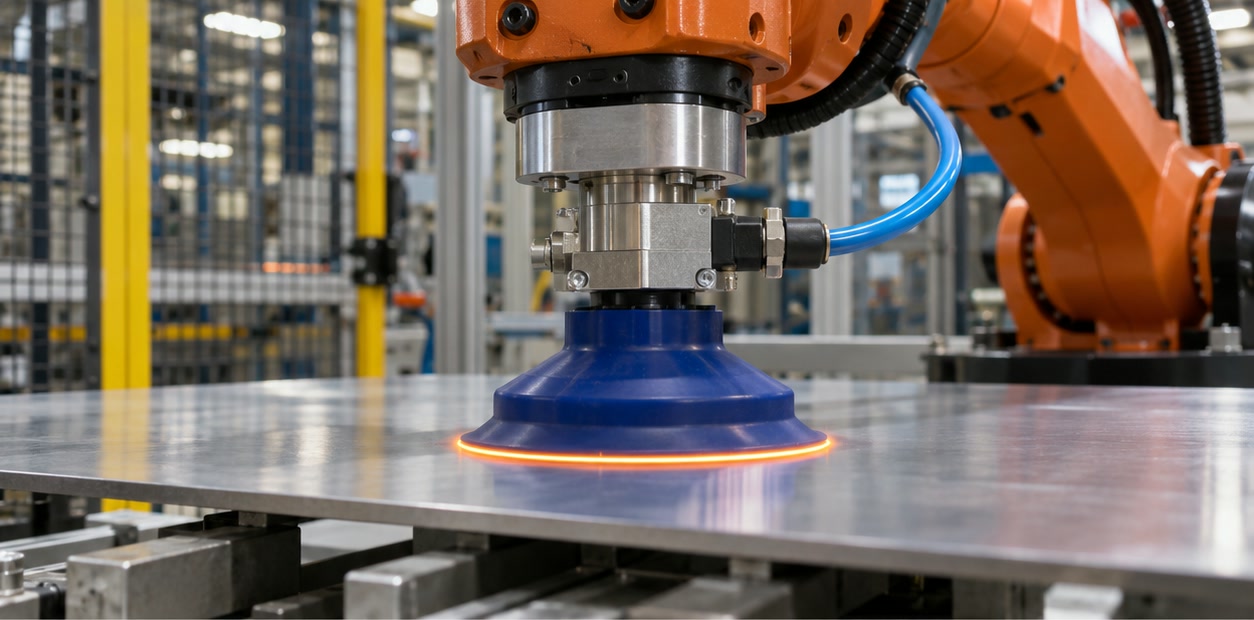
Read the guide ↗Learn how robot vacuum gripping works, how surface quality affects holding force, and how to select suction cups, vacuum generation and monitoring.
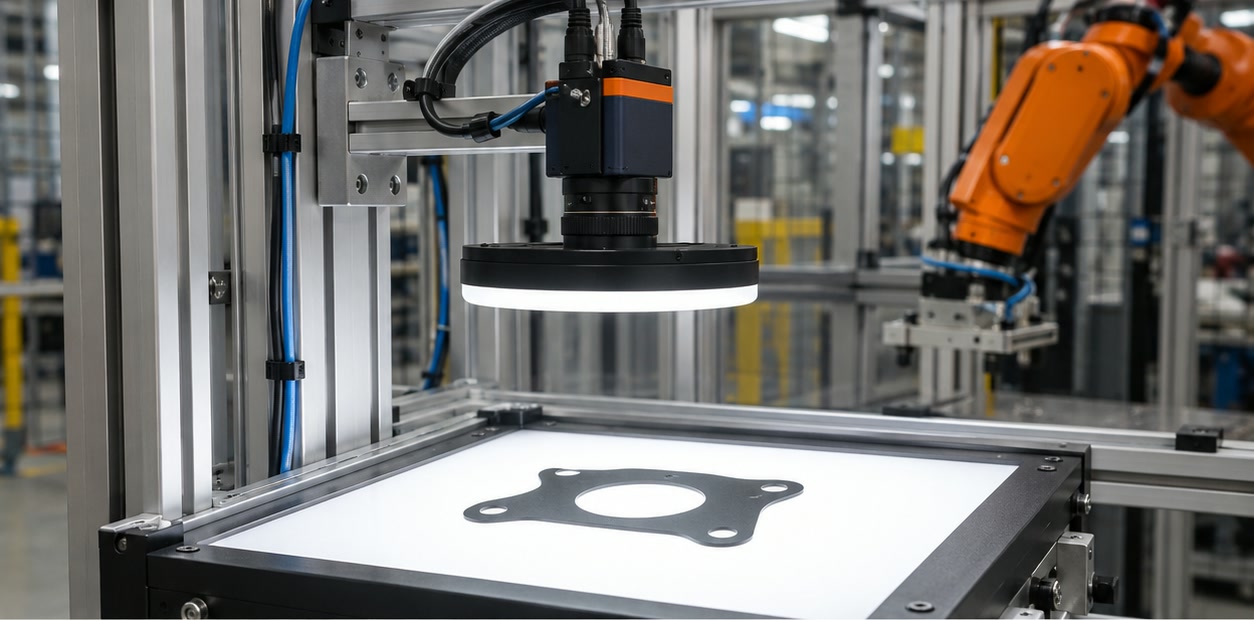
Read the guide ↗Learn what a 2D vision system can provide to a robot, how image coordinates map to robot coordinates, and what lighting, calibration and integration require.
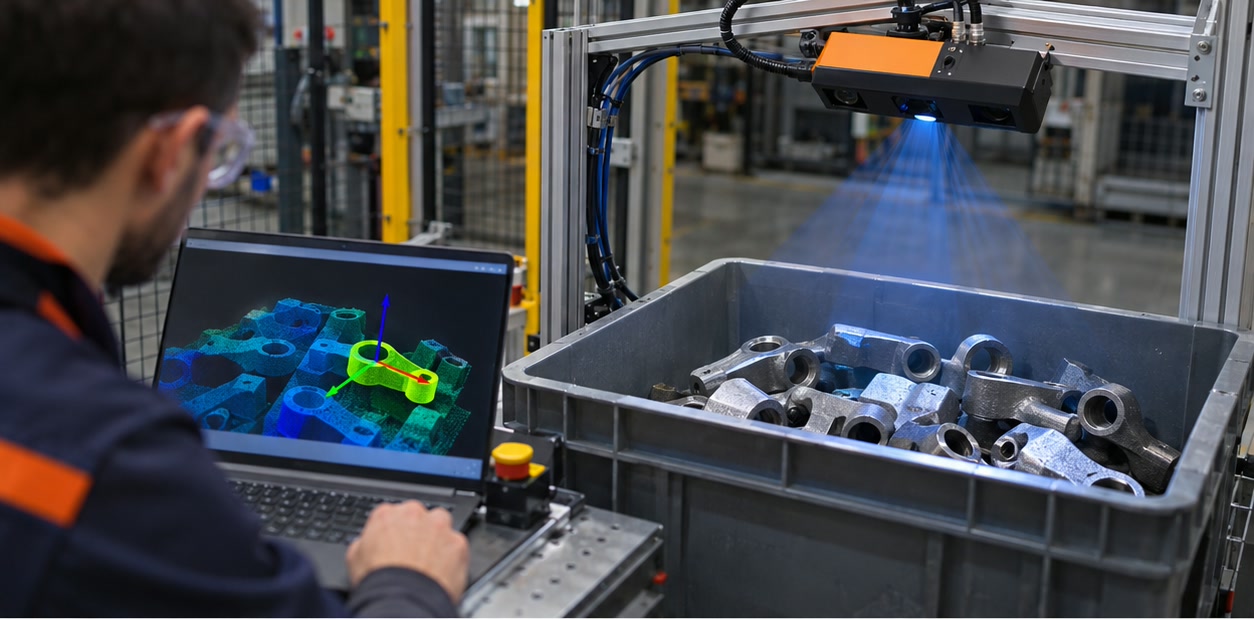
Read the guide ↗Learn how a 3D vision system estimates part shape and pose for robot picking, and what sensor geometry, surface conditions and calibration require.
Read the guide ↗Understand the camera, robot, gripper, calibration, communications and validation steps that turn a vision result into a reliable robot pick.
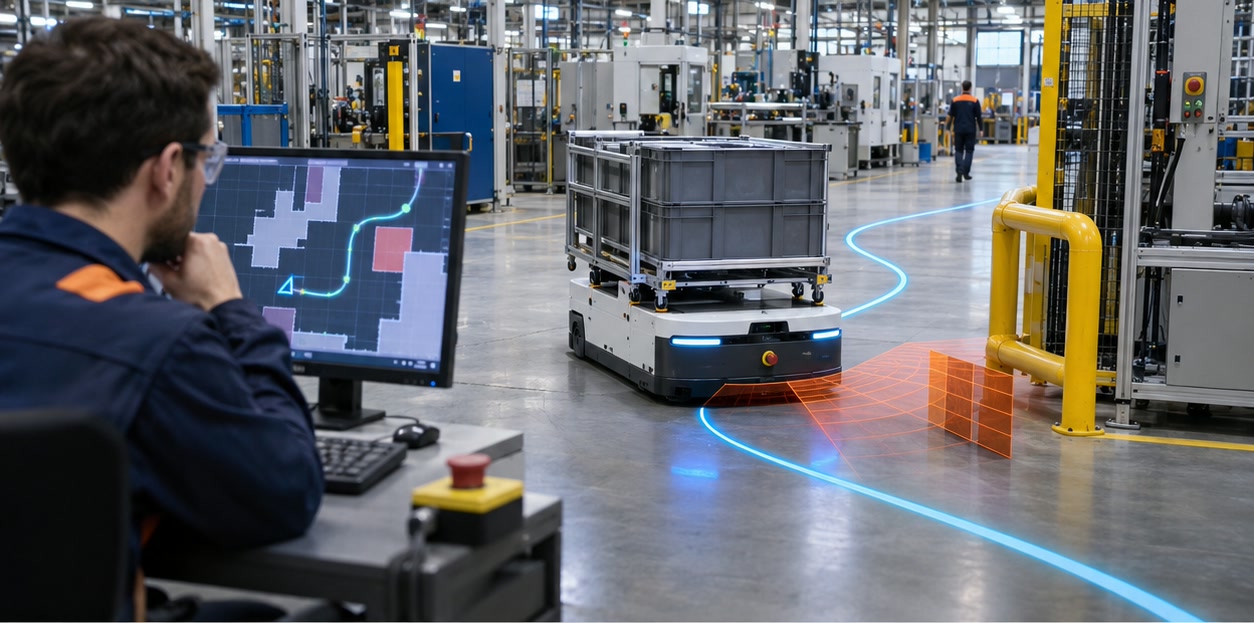
Read the guide ↗Understand common industry usage of AGV and AMR, how navigation approaches differ in practice, and why safety and deployment depend on the complete vehicle system.
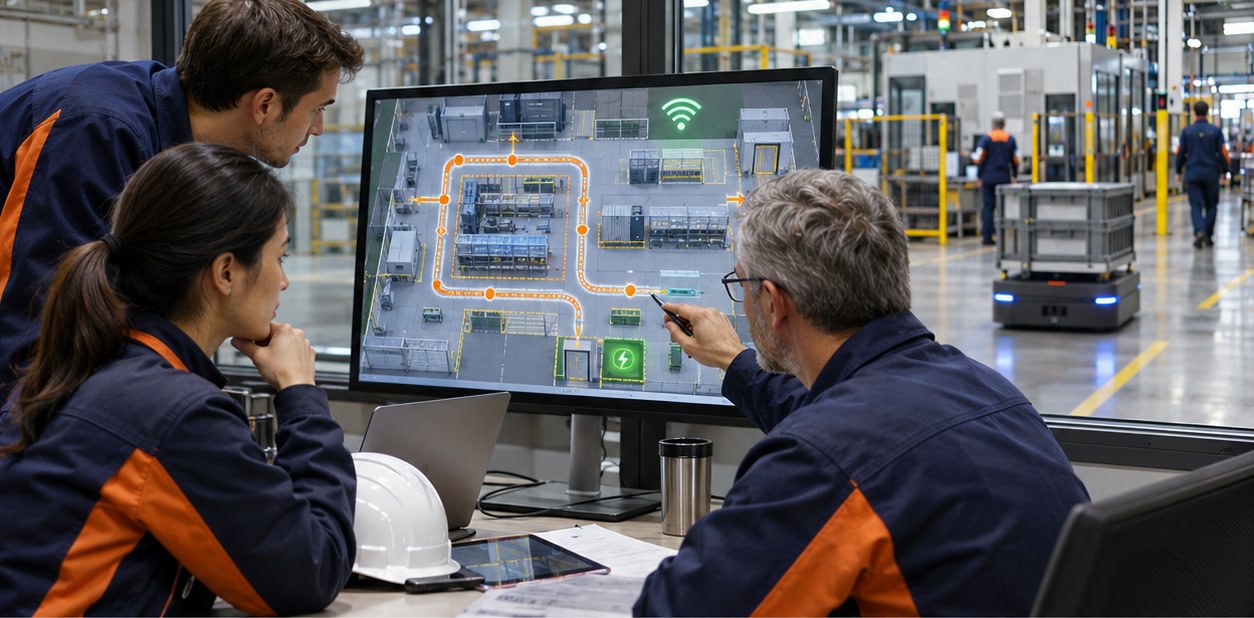
Read the guide ↗Prepare a factory for AGVs or AMRs by checking routes, floors, loads, doors, lifts, network coverage, people, traffic management, charging and support.
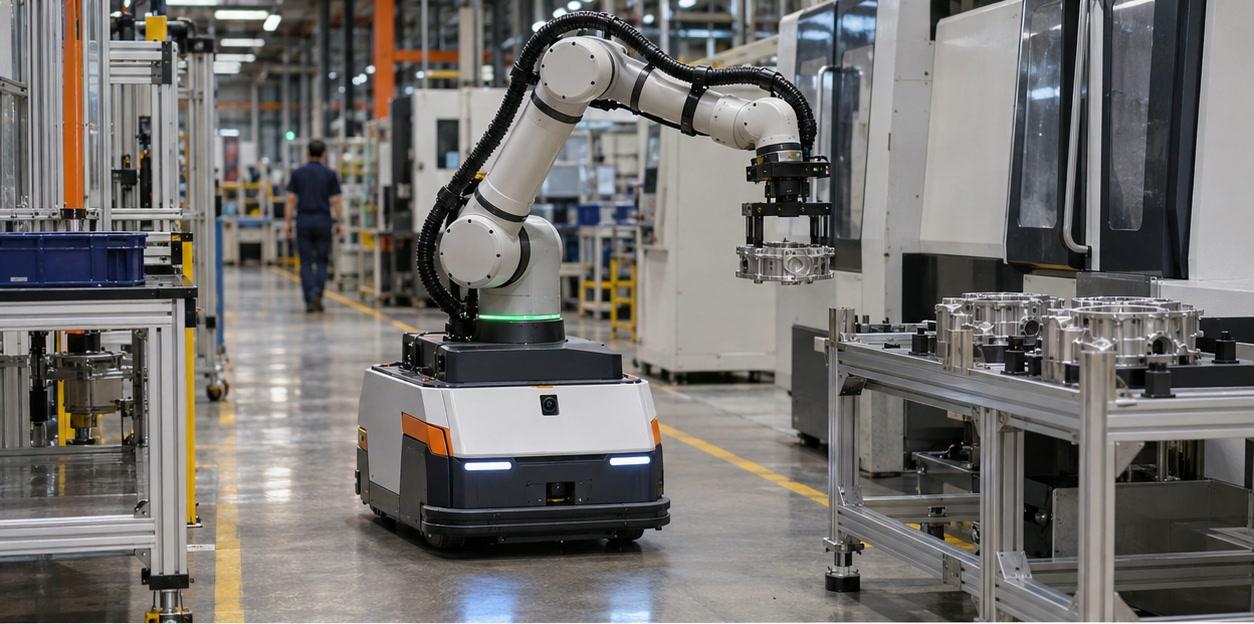
Read the guide ↗Learn what makes up a mobile manipulator, how the mobile base and robot arm work together, and which payload, navigation, coordination and safety questions matter.
Read the guide ↗