
Start with the process, not a robot model
A useful request for quotation (RFQ) describes the work the system must perform. A supplier cannot size a robot reliably from a payload number alone: the tool, workpiece, motion, cycle time, reach, environment and required interfaces all affect the proposed solution.
Describe the current process and the intended result. Include a short video or layout when available, but label assumptions and identify which details are still open.
- Part dimensions, mass, centre of gravity, material and variation
- Pick and place locations, orientations, path constraints and cycle-time target
- Shifts per day, expected operating hours and planned product changes
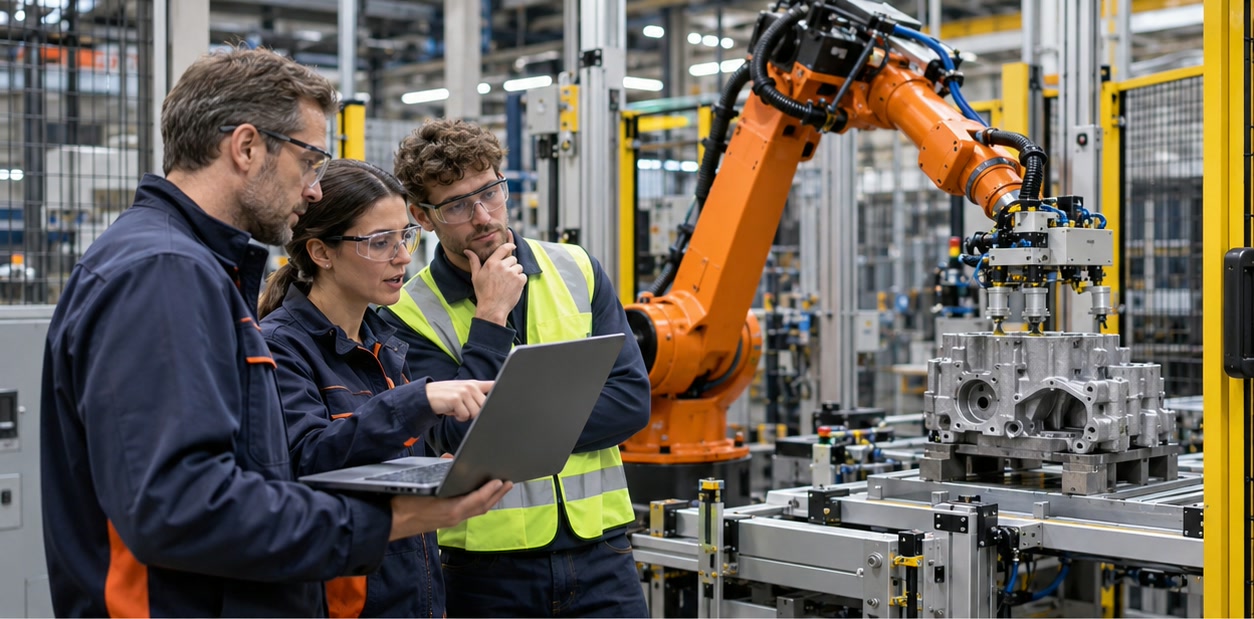
Define the cell boundary and operating conditions
State what the supplier is expected to provide and what remains with your team or another integrator. A robot quotation may cover only the arm and controller, while a turnkey cell can include tooling, guarding, conveyors, vision, installation and training.
Describe the site conditions that can change design or cost. A short list of unknowns is more useful than leaving environmental assumptions implicit.
- Available floor space, mounting surface, ceiling height and utility locations
- Temperature, dust, moisture, washdown, hazardous-area or cleanroom requirements
- Power, compressed air, network, upstream/downstream signals and plant standards
- Robot, tooling, fixtures, sensors, guarding, software and commissioning responsibility
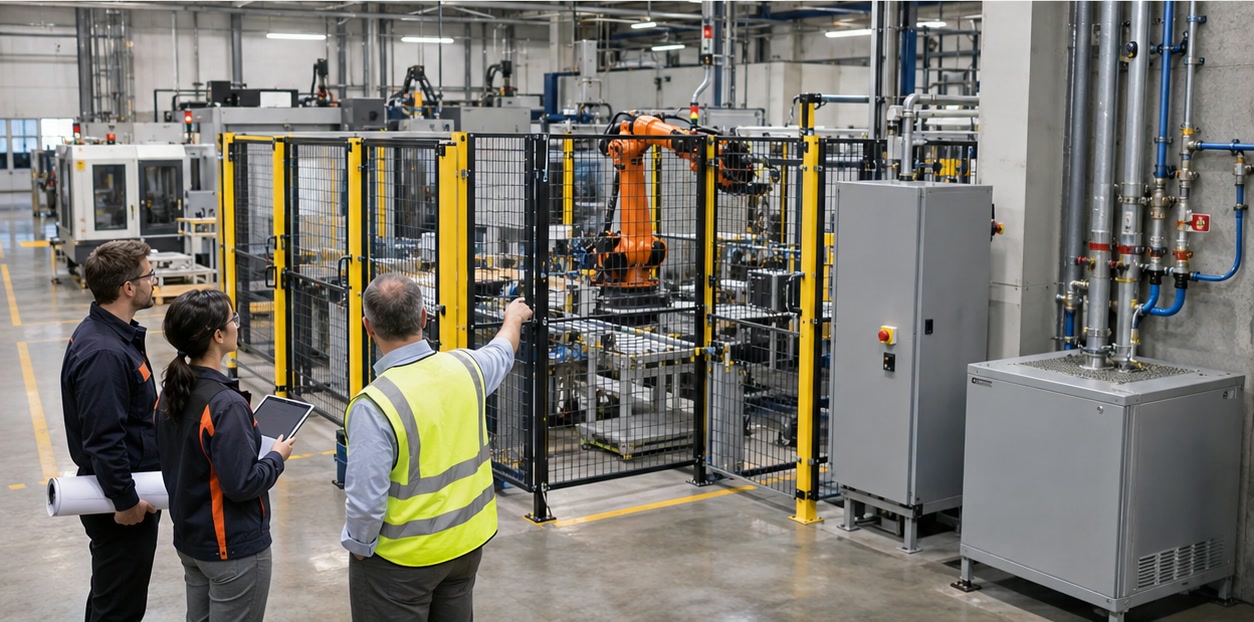
Make compliance and acceptance testable
Name the destination market and the standards or customer rules that apply to the complete application. Do not assume that a robot described as collaborative makes a whole cell safe without an application risk assessment.
Ask every bidder to state deviations, exclusions, assumptions and options separately. Agree how the system will be tested before purchase: sample parts, cycle-time method, quality limits, fault recovery and handover records should be unambiguous.
- Required declarations, manuals, drawings, risk documentation and language
- Factory and site acceptance test scope, participants and pass/fail criteria
- Training, spare parts, warranty start, response route and software access
What information should a robotics RFQ include?
Include the process and parts, target cycle time, robot motion and reach needs, operating environment, interfaces, destination market, cell supply boundary, acceptance criteria and commercial assumptions. Attach drawings or video where they clarify the task.
Can suppliers quote from a concept sketch?
They can provide a preliminary budgetary proposal if assumptions are labelled. Before a firm offer, confirm the part, cycle, layout, interfaces, safety scope and acceptance method that drive engineering and cost.
Sources and further reading
- IFR — Industrial robot market participants and distribution channels — Background on robot producers, distributors, integrators and end users.
- ISO 10218 — Robotics safety overview — Overview of industrial robot safety standards; confirm the edition applicable to the project.
Technical descriptions link to published sources. Specifications can change; verify the current documentation before purchase.