
Assess the application, not the label
The safety of a collaborative application depends on how the complete system is designed and used. The robot arm, tool, workpiece, fixtures, cell layout, movement, access and foreseeable misuse can all affect hazards. A product’s collaborative functions are inputs to the design; they do not replace the application risk assessment.
The International Federation of Robotics notes that collaborative use spans different technical arrangements. The applicable standards and measures also depend on the destination market and the specific installation.
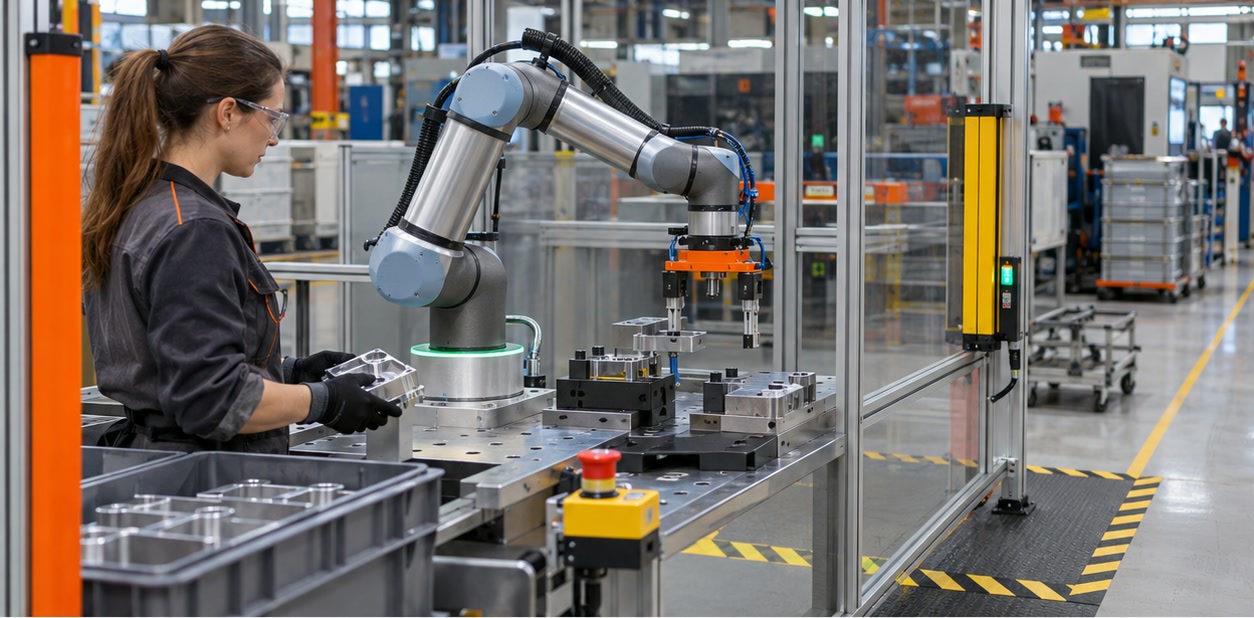
What the assessment should cover
The responsible engineering team should identify hazards across normal operation, setup, recovery and maintenance. Consider trapping or impact points, sharp tooling, part edges, payload, speed, stopping behavior and people entering or sharing the workspace. The assessment should lead to documented safeguards and validated settings for the installed application.
Universal Robots’ manual, as one manufacturer example, explains that a risk assessment includes the tool, workpiece, layout, task and people around the robot. It also describes circumstances where additional safeguarding may be needed. Use the exact manual and standards applicable to the selected system.
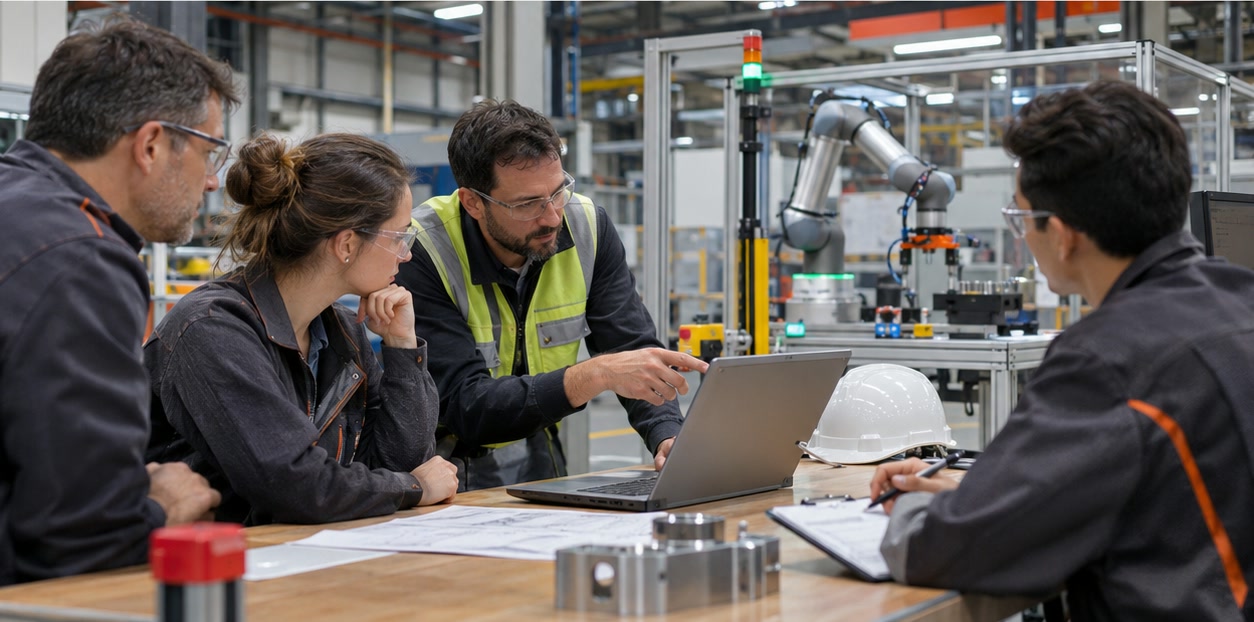
Questions for the integrator
Ask who owns the application assessment, what information they need from the buyer and how they will verify the completed system. Make sure the quote includes any sensors, guarding, safety-rated controls, commissioning tests and documentation identified by the assessment.
Safety requirements are technical and jurisdiction-dependent. This guide is an orientation for buyers, not a substitute for the current standards, competent engineering review or legal requirements in the installation country.
- Which exact tool, part and process are included in the assessment?
- Which safety functions and protective measures are planned?
- How will the installed cell be validated and documented?
Can a cobot application need guarding?
Yes. The assessment may require guards or other protective measures based on the specific task, tool, part, layout and people around the cell.
Who should complete the robot application risk assessment?
The project’s responsible and competent engineering parties should define ownership and complete the assessment using the current standards and requirements for the installation market.
Sources and further reading
- ISO 10218-1:2025 and ISO 10218-2:2025 — Current published industrial robot safety standards overview.
- Universal Robots: Risk Assessment Manual — Manufacturer documentation on application risk assessment.
- International Federation of Robotics: Collaborative Robots — Collaborative robot context and misconceptions.
Technical descriptions link to published sources. Specifications can change; verify the current documentation before purchase.