
Start with a task definition
Write down what the robot must do from start to finish: source and destination points, tool actions, part variants, handoffs, cycle target and changeover pattern. Include the actual workpiece and end effector mass, not only the bare part. Identify how the cell communicates with machines, conveyors, vision equipment and operators.
A task-based brief prevents a robot label from doing too much work. The same process family can involve different reach, speed, environmental and safety demands from one factory to another.
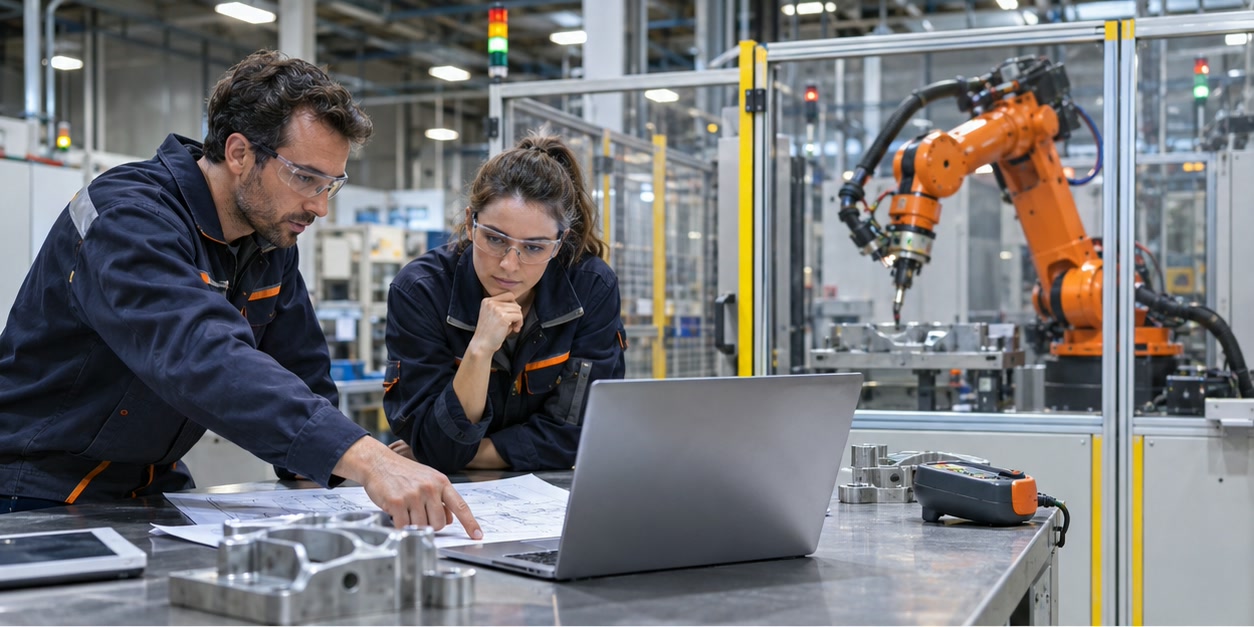
Check motion and load requirements
Sketch the tool center point path and the surrounding cell. Check whether the arm can reach all points in the required orientations, clear fixtures and stay inside its allowed workspace. Confirm payload and inertia with the tool, cables and part included; a payload value alone does not show how the wrist handles an offset load.
Estimate cycle time with the complete sequence, including gripper changes, machine handshakes and inspection steps. Request the supplier’s conditions for any published cycle or payload figure, then validate the proposed sequence using the integrator’s simulation or a representative trial.
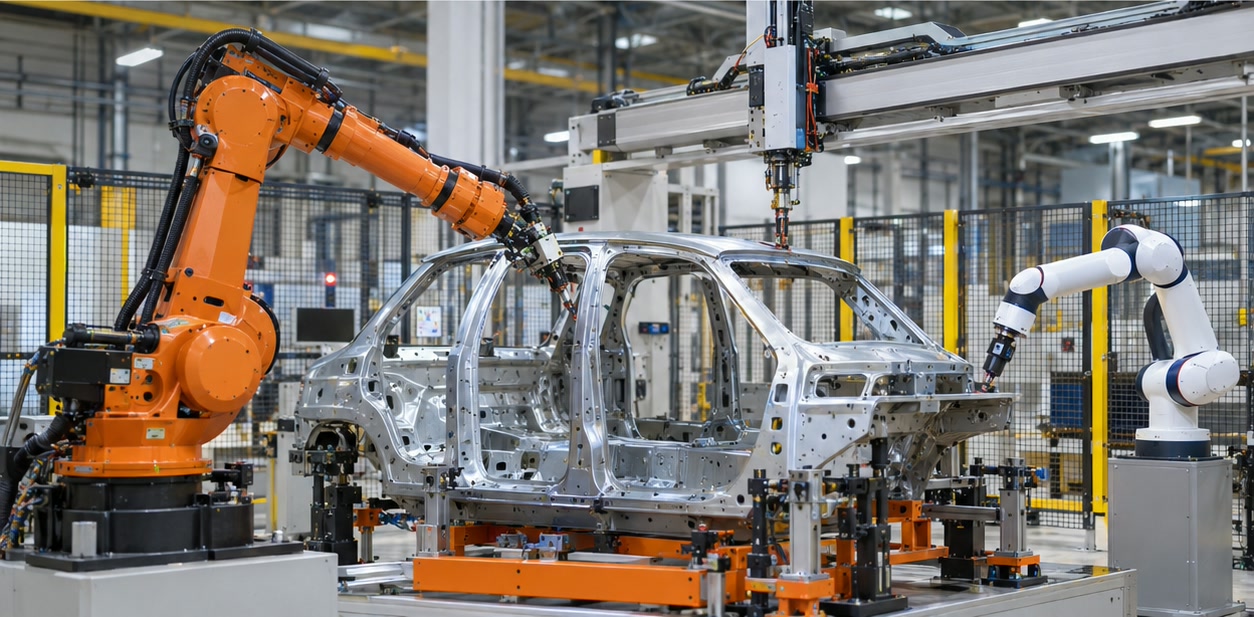
Add the factors that shape deployment
The cell also needs a mounting position, controller, guarding or other risk controls, utilities, maintenance access and a plan for fault recovery. A compact cell with frequent changeovers may value easy reconfiguration; a high-throughput line may be more sensitive to cycle and uptime. Local commissioning and service arrangements belong in the evaluation as well.
Use a requirements matrix to document mandatory conditions and open questions. Keep manufacturer examples as references to public product information, and confirm every selected model against its current manual and integration scope.
- Task and process sequence
- Part, tool and cable mass plus center of gravity
- Reach, orientation, cycle and accuracy requirements
- Cell layout, environment, interfaces and safeguarding
- Commissioning, training, spares and service responsibilities
Should I choose the robot before designing the workcell?
Create the application layout and requirements before locking a model. The cell design reveals reach, access, fixture, safety and interface needs that a headline payload value cannot answer.
Can a supplier select a robot from payload alone?
Payload is one input. Reach, tool inertia, motion, installation, environment, cycle, accuracy and system interfaces also affect whether the robot fits.
Sources and further reading
- International Federation of Robotics: Industrial Robots — Robot categories and industrial applications.
- EFORT: Robot Product Selection — A manufacturer selector organized around payload, reach and axes.
- ISO 10218-2:2025 — Robot applications and robot cells.
Technical descriptions link to published sources. Specifications can change; verify the current documentation before purchase.