
Start with part geometry and gripping points
An electric gripper uses an electric actuator to move jaws or fingers. Before selecting a model, define how the part will be held: internal or external gripping, parallel or angular motion, number of contact points, finger shape and the surface finish that can be accepted.
Measure the range of part sizes rather than selecting around one nominal sample. Check whether the jaw travel can cover tolerance and product variants without pushing the gripper outside its force, speed or cycle limits.
- Part mass, dimensions, centre of gravity and material
- Required jaw stroke for the smallest and largest part
- Finger length, contact material, tolerance variation and allowable marks
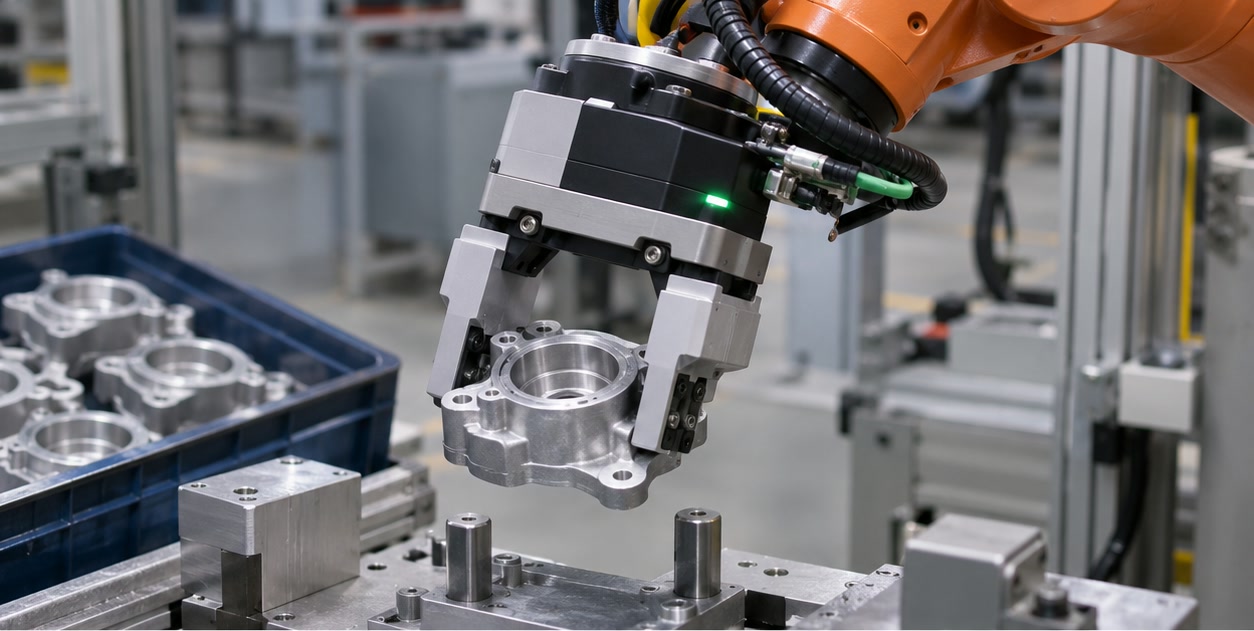
Size force, speed and feedback for the motion
The force needed to hold a part depends on its mass, friction, orientation, robot acceleration and contact geometry. Use the gripper manufacturer’s force definition and account for dynamic motion and a suitable safety margin; do not convert a catalogue maximum directly into a guaranteed holding load.
Electric designs can offer adjustable stroke, force or position feedback, but the functions vary. Confirm the controller, command interface, grip detection method, response time and what the tool does after a power or communication fault.
- Required holding force at the intended jaw position
- Opening and closing time at the needed stroke and force
- Position, force or grip feedback and fault behavior
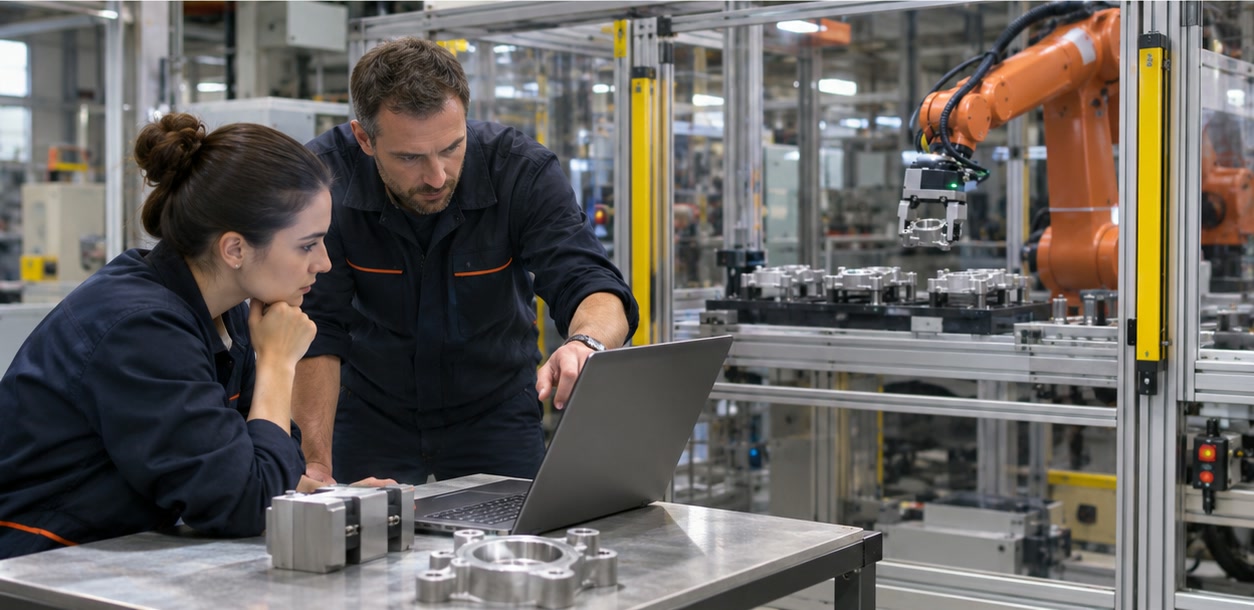
Check integration before ordering
An electric gripper may need a dedicated controller or a specific robot communication interface. Confirm supply voltage, I/O or fieldbus, cable routing, flange adapter, software support and access to diagnostic information.
Test representative parts and the full robot motion. Include part changes, contamination, wear, missed grips, emergency stops and recovery. Record the approved configuration, jaw design and program settings for future maintenance.
- Mechanical fit, total mass and robot wrist limits
- Power, controller, communication and available status signals
- Part trials, changeover plan, wear items and service documentation
When should I choose an electric robot gripper?
An electric gripper can be useful when an application needs controlled jaw position, adjustable force or stroke, feedback, or operation without a compressed-air connection at the tool. Confirm the required functions and integration needs on the specific model.
How much gripping force does my robot gripper need?
It depends on workpiece mass, orientation, acceleration, friction, finger geometry and contact conditions. Use the manufacturer’s force definition, include the actual robot motion and validate with representative parts.
Sources and further reading
- Festo — Robot gripper selection in five steps — Guidance on application requirements and electric gripping functions.
- DH-Robotics — Electric grippers — Manufacturer product families for electric parallel, adaptive and rotary grippers.
- Festo — Gripper product categories — Manufacturer overview of electric and pneumatic gripper types.
Technical descriptions link to published sources. Specifications can change; verify the current documentation before purchase.