
Map the work and traffic before selecting a vehicle
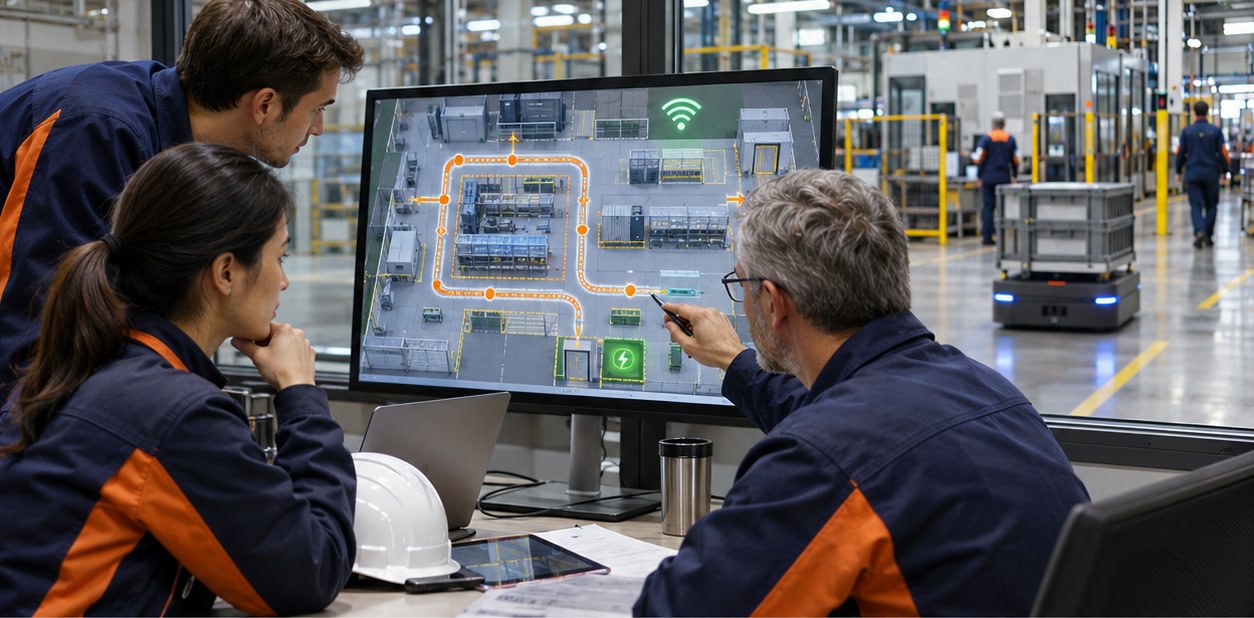
Begin with the material flow: pickup and drop-off points, load type, peak frequency, shift pattern and delivery rules. Map each route and its interactions with people, forklifts, doors, lifts, conveyors and other vehicles. A route that looks open on a drawing may be blocked during a busy shift.
Measure the tightest locations and observe real traffic. Identify where the mobile robot waits, turns, parks, loads or hands material to another system.
- Route distance, aisle width, turning areas and parking locations
- Load dimensions, mass, stability and pickup/drop-off interface
- Peak transport demand, shift schedule and interaction with other traffic
Check floor, connectivity and infrastructure
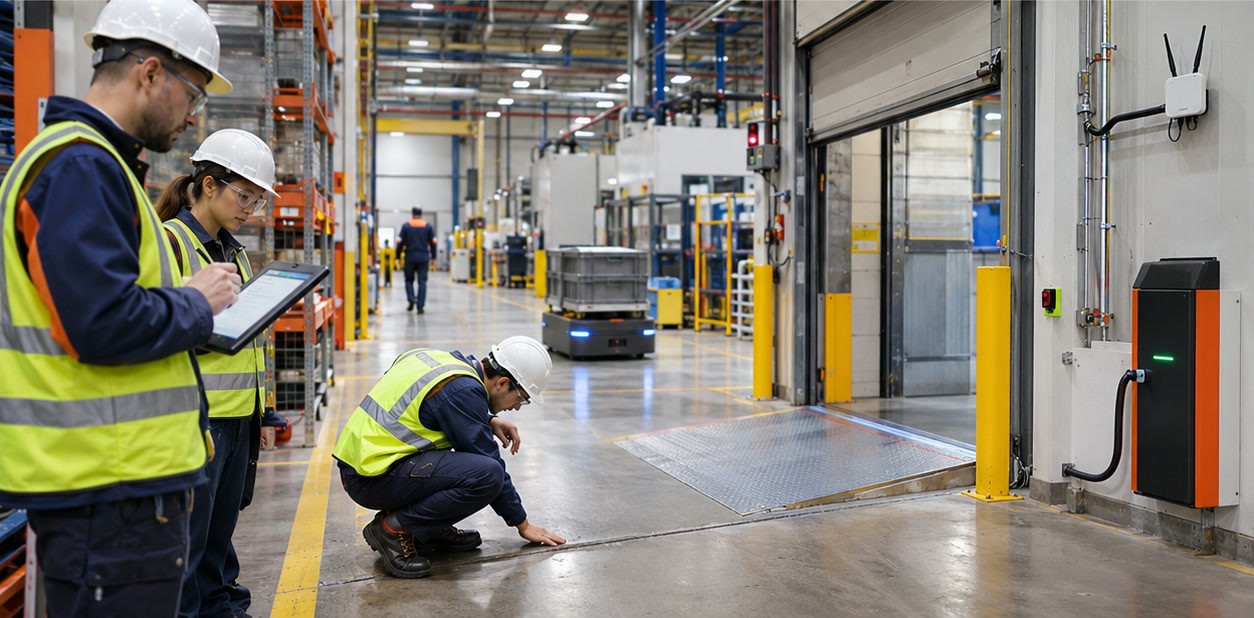
Floor joints, ramps, thresholds, slopes, debris and changes in surface can affect movement and localization. Check lighting or reflective conditions if the navigation system relies on cameras or optical features. Confirm any floor work or markers needed before commissioning.
Map the infrastructure the vehicle must use. Doors, lifts, fire doors, access control, charging and production equipment may need signals or network links. Validate wireless coverage along the full route, including parking and handoff points.
- Floor flatness, slope, thresholds, joints and surface condition
- Door, lift, fire-system, charger and machine interfaces
- Wireless coverage, traffic-control network and charging locations
Plan safety, operations and acceptance
Define the operating zone, pedestrian rules, crossings, speed zones, warning methods, stop behavior and maintenance access with the project team. Risk controls depend on the whole vehicle system and the site; an AMR label does not replace an application assessment.
Set acceptance conditions using actual loads and routes. Include delivery success, cycle time, traffic interaction, recovery after blockage, battery or charging behavior, shift coverage and operator training. Keep layout and traffic rules under change control.
- Site risk assessment, pedestrian routes and emergency arrangements
- Route trials with actual loads, traffic and operating schedules
- Fault recovery, charging, training, maintenance and service handover
What should I check before installing an AMR in a factory?
Map the transport task and routes, measure clearances and floor conditions, assess traffic and people, verify network and door or lift interfaces, plan charging and maintenance, and define the safety and acceptance requirements for the complete system.
Do mobile robots need a factory site survey?
A site survey helps verify routes, floors, network coverage, interfaces, load handoffs and traffic conditions before final design. It should include normal operating periods and known congestion points.
Sources and further reading
- ISO 3691-4:2023 — Driverless industrial trucks and their systems — Safety requirements and verification for driverless industrial trucks and systems.
- ISO/DIS 3691-4 — Revision under development — Current project status for the standard’s next edition.
- IFR — Robot definitions — Definitions for mobile robots and industrial mobile platforms.
Technical descriptions link to published sources. Specifications can change; verify the current documentation before purchase.