
What an axis represents
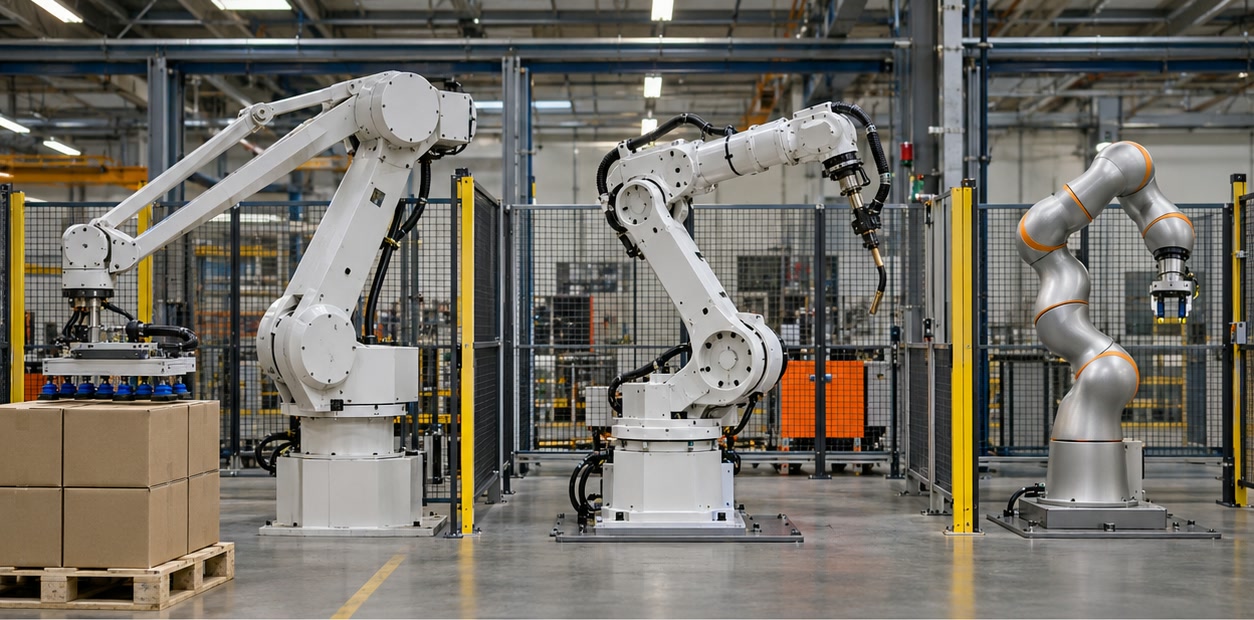
An axis is a direction of controlled linear or rotary motion. The number of axes describes available controlled movement, not a direct score of capability. A four-axis palletizing arm, a six-axis articulated arm and a seven-axis articulated arm can each suit different layouts and tool paths. Collaborative describes the robot and application context; it is not a specific axis count.
Industrial robot definitions commonly refer to robots programmable in three or more axes. Manufacturers may use axis count in the model name or catalogue; confirm the mechanical layout and the actual controlled axes in the manual.
What additional axes can change
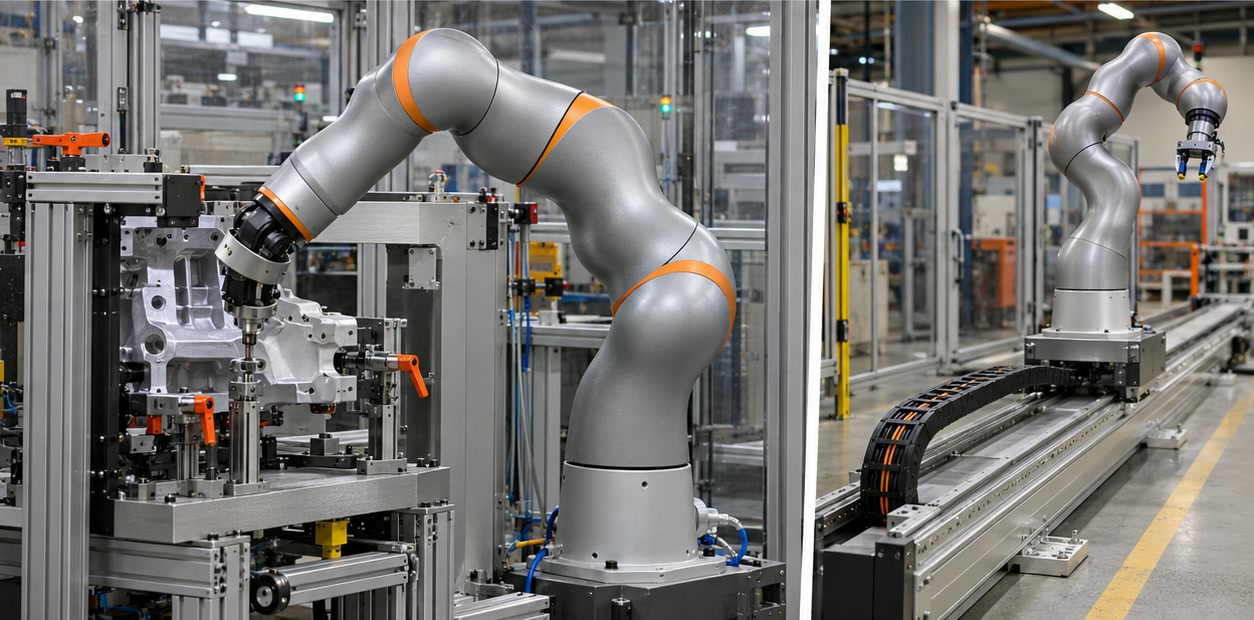
An extra wrist axis can change tool orientation. A seventh arm axis can give the system another way to reach a pose or move around an obstruction. An external positioner or linear track can also add coordinated motion without changing the robot arm’s axis count.
More axes can increase the range of possible configurations, while also adding setup, programming and integration considerations. The controller, path planning, fixtures and safety design remain part of the system.
Define the motion you need
List each process point and the required tool orientation at that point. Then sketch the approach and retreat path, including obstacles, cables and safe access. Ask the supplier to show how the proposed axes reach those points in the planned mounting arrangement.
Choose axis count from the required motion and cell layout. A clear path and fit-for-purpose tool may matter more than an additional axis that the process never uses.
Is a 6-axis robot always more flexible than a 4-axis robot?
It can offer additional tool-orientation options, but whether that helps depends on the task, layout, controller and integration. The axis count alone does not establish fit.
Does a robot arm’s axis count include an external turntable?
Usually the arm’s axes and external positioner axes are identified separately. Check the system documentation and coordinated motion configuration.
Sources and further reading
- International Federation of Robotics: Industrial Robots — Industrial robot definition and axis terminology.
- EFORT: Robot Product Selection — Example manufacturer selector listing controlled axes by model.
- ABB IRB 460 product specification — Manufacturer specification for a four-axis palletizing robot.
- ABB industrial robot portfolio — Manufacturer overview of six-axis articulated robot families.
- KUKA LBR iiwa — Manufacturer specification for a seven-axis lightweight robot.
Technical descriptions link to published sources. Specifications can change; verify the current documentation before purchase.